R&D Department: How to Build Your Research & Development Team
25 min
· March 10, 2026
Most product companies reach a point where the engineering team is stretched across too many priorities, and the roadmap keeps growing faster than the capacity to deliver it. The usual response is to hire more engineers into existing teams, but that only scales the current work. It does not create space for the kind of longer term thinking, prototyping, and technical exploration that actually moves a product forward. That requires a dedicated R&D department, one with its own charter, its own hiring plan, and real authority to pursue the problems that do not fit neatly into a sprint cycle.
The decision to build one is rarely the hard part. The complexity shows up the moment you start working through the specifics: which roles to hire first and in what order, whether to build the team locally or in another geography, who takes responsibility for employment law and payroll if the engineers sit in a different country, and how to structure the whole thing so that a distributed R&D staff operates as a genuine extension of your company rather than a separate group you manage at arm’s length.
Since 2017, Newxel has been building R&D teams for product companies that face these exact decisions. Our engagements have ranged from a single team lead who grew into an architect role, to 24 person engineering departments with purpose built facilities, to cross border teams of 17+ specialists spanning multiple countries. The industries vary (fintech, cybersecurity, HR tech, gaming, automotive, big data), but the underlying challenge is always the same: build a functioning R&D center quickly, staff it with people who integrate into your culture, and do it without drowning in operational overhead. We now operate across 8 global hiring hubs with 500+ professionals under management.
The framework in this guide reflects what we have learned from those engagements. Where we reference external research, we interpret it through our own operational experience, because data points mean very different things depending on whether you have actually built the teams behind them. Where others cite statistics, we can tell you what those numbers look like when a real CTO is making real hiring decisions in a real market.
An R&D department is the branch of your company that owns ideation, experimentation, prototyping, and the development of new products or meaningful improvements to existing ones. In a software product company, the research and development department is where your competitive advantage is either built or lost.
What separates a true R&D department from a feature factory is intentionality. Feature teams ship what is on the backlog. R&D teams investigate whether the backlog is even pointing in the right direction. They prototype new architectures, test emerging technologies, validate market assumptions, and build the technical foundation that product teams later scale.
| $2.87T | Global R&D expenditure reached $2.87 trillion in 2024, nearly tripling in real terms over 25 years. [1][2] |
That $2.87 trillion figure gets cited often, usually to suggest that spending is growing and you should spend more too. From where we sit, the more important observation is where that money is going. The top 2,500 corporate R&D spenders now invest over $1 trillion annually, and the list is increasingly dominated by software and AI firms. [3] The companies our clients compete with, Alphabet, Microsoft, Meta, Amazon, spend more on R&D than every country except the U.S., China, and Japan.
What this means in practice: when an enterprise company comes to us, they are not exploring whether R&D matters. They already know it does. They need a 24 person engineering team operational in months, not years, because their competitors are investing at that scale and speed is the only variable they can still control. When we built their R&D center in Ukraine, including a purpose built 500+ square meter facility with an automation framework, the team became a permanent extension of their global engineering capacity. The investment was not experimental. It was strategic infrastructure.
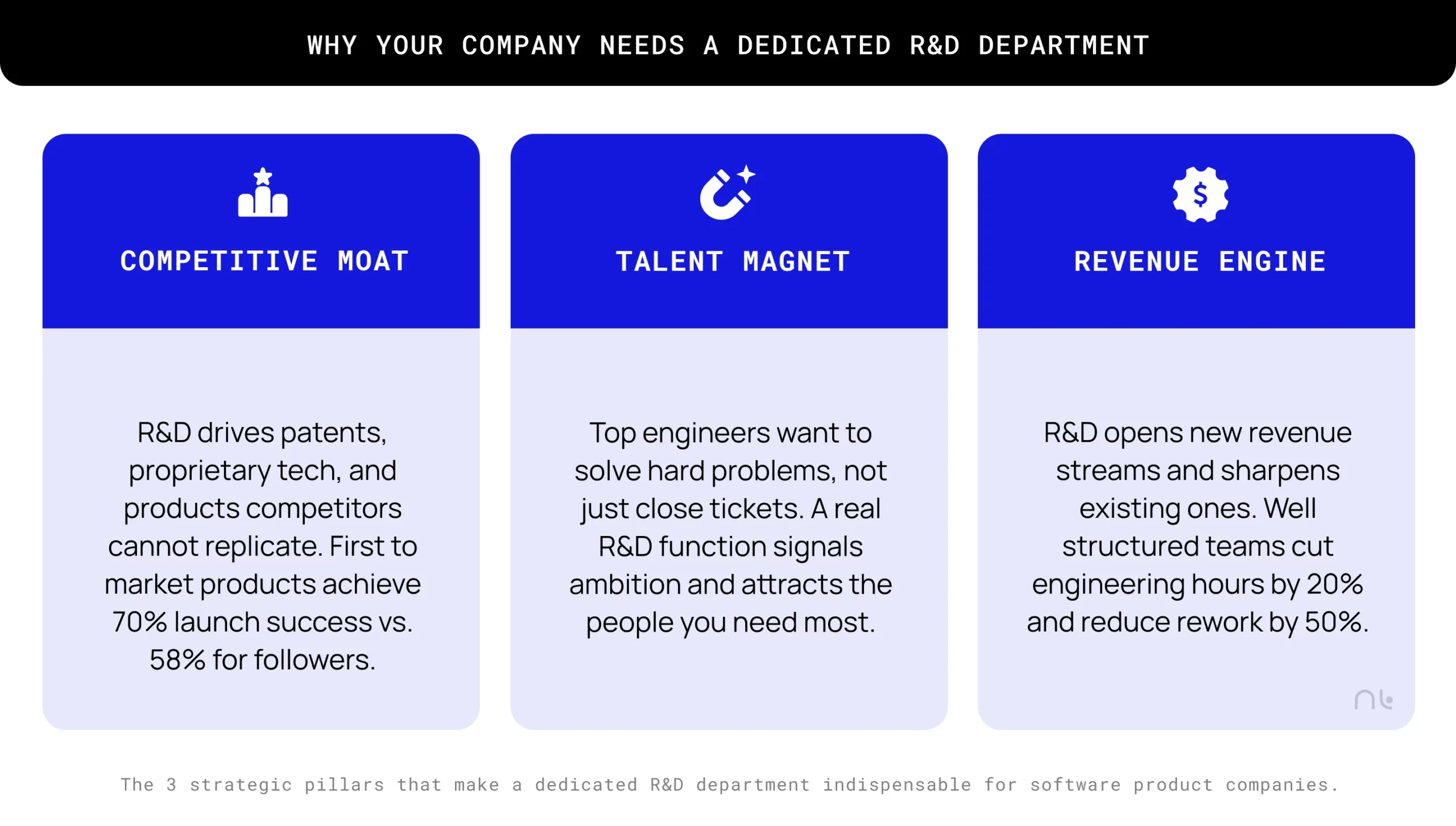
Figure 1: The 3 strategic pillars that make a dedicated R&D department indispensable for software product companies.
Industry data says the global tech talent shortage affects 76% of companies and that hiring for specialized roles takes an average of 66 days per position. [4] We can add texture to those numbers. When a HRM provider came to us, they had already spent three months with another vendor trying to fill a single Kotlin/Scala backend developer role. Three months, zero hires. That is what 76% actually feels like: not an abstract statistic, but a quarter of lost momentum on a critical product initiative. We presented qualified candidates within weeks and had their first developer onboarded within a month. The 66 day average is real, but it does not have to apply to you.
So what is an R&D team, really, in terms of the people who sit in it? The answer depends on your stage, your domain, and whether your R&D function owns full product delivery or focuses on research and prototyping.
We have assembled R&D teams ranging from a single team lead (one od our clients started with one hire in 2021) to full 27 person departments (a fintech client serving 8.5 million customers in 2025). The pattern is consistent: the sequence in which you hire matters more than the total count.
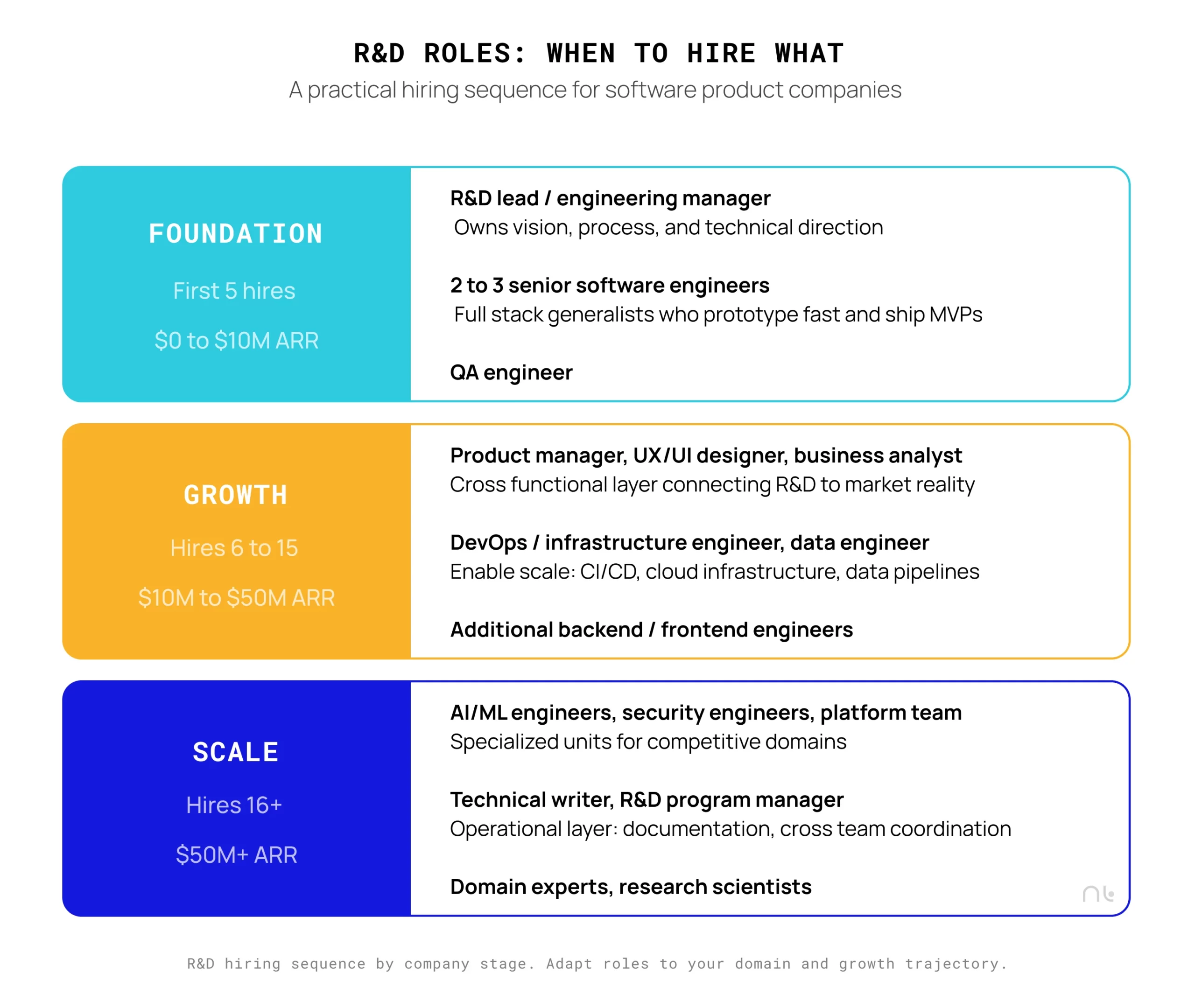
Figure 2: R&D hiring sequence by company stage. Adapt roles to your domain and growth trajectory.
Insight Partners analyzed 250+ SaaS scaleups and found a 4.5:1 ratio of engineers to other product R&D staff. [5] That ratio matches what we see in our own engagements, but the number alone does not tell you enough. The question is what kind of non-engineering roles you need and when. When our HRTech client scaled their team with us from a single backend developer to 17+ specialists, the composition naturally evolved to include QA, DevOps, and team leadership alongside the core engineering hires. They did not add a product manager or a UX designer first. They added the infrastructure that let the growing team ship reliable code. The 4.5:1 ratio is a useful benchmark, but only if you read it as a ceiling for engineering concentration, not a formula for premature diversification.
From our experience building 30+ R&D teams: “How many people do I need?” is usually the wrong first question. The right one is: “What decisions does my R&D team need to make autonomously, and what capabilities does that require?” Start with decision rights, then map to roles.
Our data management client’s engagement illustrates this well. We started with a single team lead who had deep Java and Scala expertise. Within two years, that person was promoted to architect. The team grew to 6+ engineers, all embedded within client’s development operations. The first hire shaped the culture, the tooling, and the standards for everyone who followed. Getting that foundation right was worth more than rushing to reach a headcount target. The client’s team themselves described it clearly: all the developers we hired are great professionals and considerably enhance our expertise, contributing to the company’s success.
Also worth noting: the line between R&D staff and product engineering staff is blurrier than ever. In modern software companies, the research and development team often is the product team. The same people prototyping new capabilities are also shipping them. This is healthy. The moment R&D becomes disconnected from delivery, you are paying for research that never reaches customers.
R&D team structure typically evolves with the company’s funding stage and product maturity. Early-stage startups usually prioritize a small group of experienced engineers who can build and iterate quickly. As the company grows, the focus shifts toward specialized roles, multiple development squads, engineering management, and dedicated functions such as QA, DevOps, security, and architecture.
The table below provides indicative team-size ranges and typical hiring priorities rather than fixed benchmarks. There is no universal R&D budget for each stage, as costs vary significantly depending on geography, technology stack, seniority, and product complexity.
| Company stage | Typical R&D team size | Recommended hiring sequence | Cost considerations |
|---|---|---|---|
| Seed | 3–8 people | Founders/CTO → Senior engineers → Full-stack/product engineer → QA as needed | Keep the core team lean and prioritize senior, versatile engineers. |
| Series A | 8–20 people | Engineering lead → Core developers → QA → DevOps → Product/Project support | Balance team growth with product priorities and avoid building unnecessary management layers. |
| Series B | 20–50 people | Engineering managers → Development squads → QA → DevOps/SRE → Product/Design | Costs grow with specialization, management, infrastructure, and the number of parallel product initiatives. |
| Scale-up | 50–150+ people | Multiple squads → Engineering managers → Architects → Platform/DevOps → Security & specialized roles | Distributed hiring and shared technical functions can help control R&D operating costs while scaling. |
| Enterprise | 150+ people | Business-unit teams → Engineering leadership → Specialized R&D functions → Platform, Security, QA, Architecture | The focus shifts from individual hiring costs to total R&D operating cost, scalability, governance, and location strategy. |
There is no universal structure for a research and development department. But there are three models that work in practice, and your choice should be driven by your company’s size, product complexity, and how much coordination you can realistically sustain.
Engineers in one group, QA in another, design in another. Each function reports to its own lead. McKinsey’s research on R&D organizations finds that component-based structures (which functional teams tend to become) cause integration failures and slow time to market.
Small, autonomous teams that each contain every capability needed to deliver independently: an engineer or two, a designer, a product owner, and QA coverage. This is the dominant model in high performing SaaS R&D departments. It collapses communication chains and puts decision making where knowledge lives.
Team members report to both a functional lead and a project or product lead. Pave’s benchmark data on 233,000 R&D employees shows that matrix structures have become more common as companies cross the 100-engineer threshold. In our experience, the matrix only works when the reporting lines are genuinely clear, not just drawn on a slide.
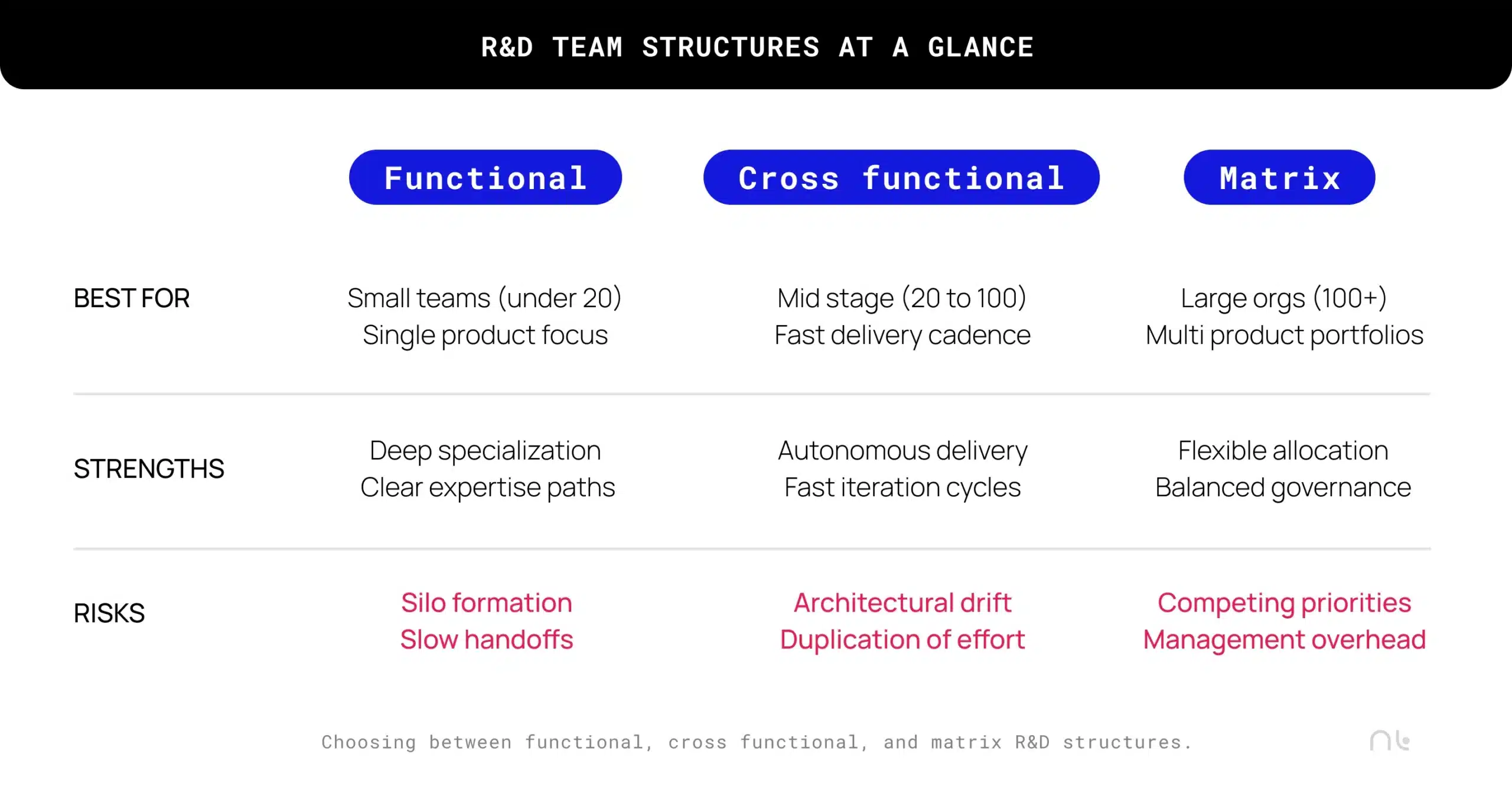
Figure 3: Choosing between functional, cross functional, and matrix R&D structures.
When planning an R&D team, companies should evaluate the engagement model, cost factors, provider selection, security and compliance requirements, and risk management before choosing how to build and scale. A strong talent strategy should also define where to source specialists, how to structure the team, and how easily it can scale as business needs change.
Building an effective research and development team requires more than hiring engineers. You need a clear strategic direction, the right organizational structure, reliable development processes, and mechanisms for knowledge sharing and accountability. The six-step framework below combines the traditional eight-step approach into a more practical sequence.
Before hiring anyone, define what your R&D team is responsible for and what business outcomes it should deliver. A clear R&D charter should outline the problems the team will solve, its areas of ownership, decision-making authority, and how its work connects to broader company objectives.
Next, identify 2–3 strategic focus areas for the first 12 months. These could include developing new products, building AI capabilities, improving automation, advancing core technology, or exploring emerging technologies.
Keep the focus specific enough to guide hiring and prioritization while leaving room for experimentation. A useful approach is to dedicate most capacity to initiatives tied to current business objectives while reserving a smaller portion for longer-term exploration.
For example, instead of asking an R&D team to “work on innovation,” define a concrete objective such as building and maintaining an automation framework for QA tooling. This gives the team a clear starting point and makes progress easier to measure.
Once the strategic priorities are defined, translate them into the capabilities and roles you need. Map each R&D focus area to specific technical competencies and determine which roles should be hired first.
A typical team might include:
The exact composition depends on your product, technology stack, and stage of growth. Start with the minimum team required to deliver the first milestones, then scale as the workload and product roadmap justify additional roles.
At the same time, choose your operating model:
The right model depends on how quickly you need to scale, where the required talent is located, and how much operational infrastructure you want to manage yourself.
Start with the roles that establish the technical foundation of the team. In many cases, this means hiring experienced engineers and an engineering lead before expanding into more specialized positions.
However, technical expertise should not be the only hiring criterion. Effective R&D teams depend on trust, communication, intellectual honesty, and the ability to challenge assumptions. Candidates should be evaluated not only on what they can build, but also on how they collaborate, communicate uncertainty, respond to failure, and share knowledge.
Define your cultural expectations early and use them consistently throughout the recruitment process. A technically excellent candidate who cannot work effectively within the team’s communication and decision-making model can create more problems than a slightly less experienced engineer who is a strong long-term fit.
As the team grows, reinforce this culture through onboarding, technical reviews, mentoring, and clear ownership rather than relying on informal communication alone.
Your R&D team should have a standardized development environment from the beginning. This reduces friction during onboarding and allows engineers to start contributing without spending weeks configuring basic infrastructure.
At minimum, establish:
The exact toolchain will depend on your technology stack, but the principle is the same: make the path from writing code to testing, reviewing, and deploying it predictable and repeatable.
It is also important to document development standards early. As the team expands, these standards become the foundation for onboarding new engineers and maintaining consistent engineering practices across multiple squads.
R&D needs freedom to experiment, but it also needs a clear mechanism for measuring progress. Establish a regular cadence for reviewing priorities, technical progress, experiments, and business outcomes.
Depending on the organization, this might include:
Frameworks such as OKRs can help connect technical initiatives with business objectives without turning R&D into a bureaucracy-heavy function.
The goal is not to monitor every task. Instead, create enough visibility for leadership to understand what the team is building, what it has learned, what is blocked, and whether priorities need to change.
Knowledge management becomes increasingly important as R&D teams grow or become distributed across countries. Critical knowledge should never exist only in one engineer’s head or on one person’s laptop.
Establish processes for:
For distributed teams, make sure NDAs, IP assignment agreements, and relevant access permissions are in place before work begins.
Knowledge transfer should also be treated as an ongoing process rather than something that happens only when an employee leaves. Regular documentation and peer knowledge-sharing reduce dependency on individual specialists and make the R&D organization more resilient as it scales.
The result is a repeatable R&D operating model: define what the team needs to achieve, design the right structure, hire people who fit both the technical and cultural requirements, establish the engineering foundation, create a sustainable operating rhythm, and protect the knowledge and IP the team creates.
When local hiring cannot provide the talent, speed, or cost structure you need, building an R&D team in another country can be a practical alternative. Staff augmentation allows you to access international talent while keeping direct control over the engineers, technology, priorities, and day-to-day work.
R&D is rarely a fixed-scope process. Teams need to experiment, prototype, change direction, and iterate alongside existing engineering teams. That makes deep integration and direct technical management especially important.
Unlike traditional outsourcing, software development staff augmentation keeps the engineers under your technical leadership. They use your tools and processes, participate in your meetings and code reviews, and work as an extension of your internal team.
At the same time, the staff augmentation provider handles the operational layer — including employment contracts, payroll, taxes, HR, benefits, and local compliance. This gives companies a way to expand their R&D capacity internationally without building the entire local infrastructure themselves.
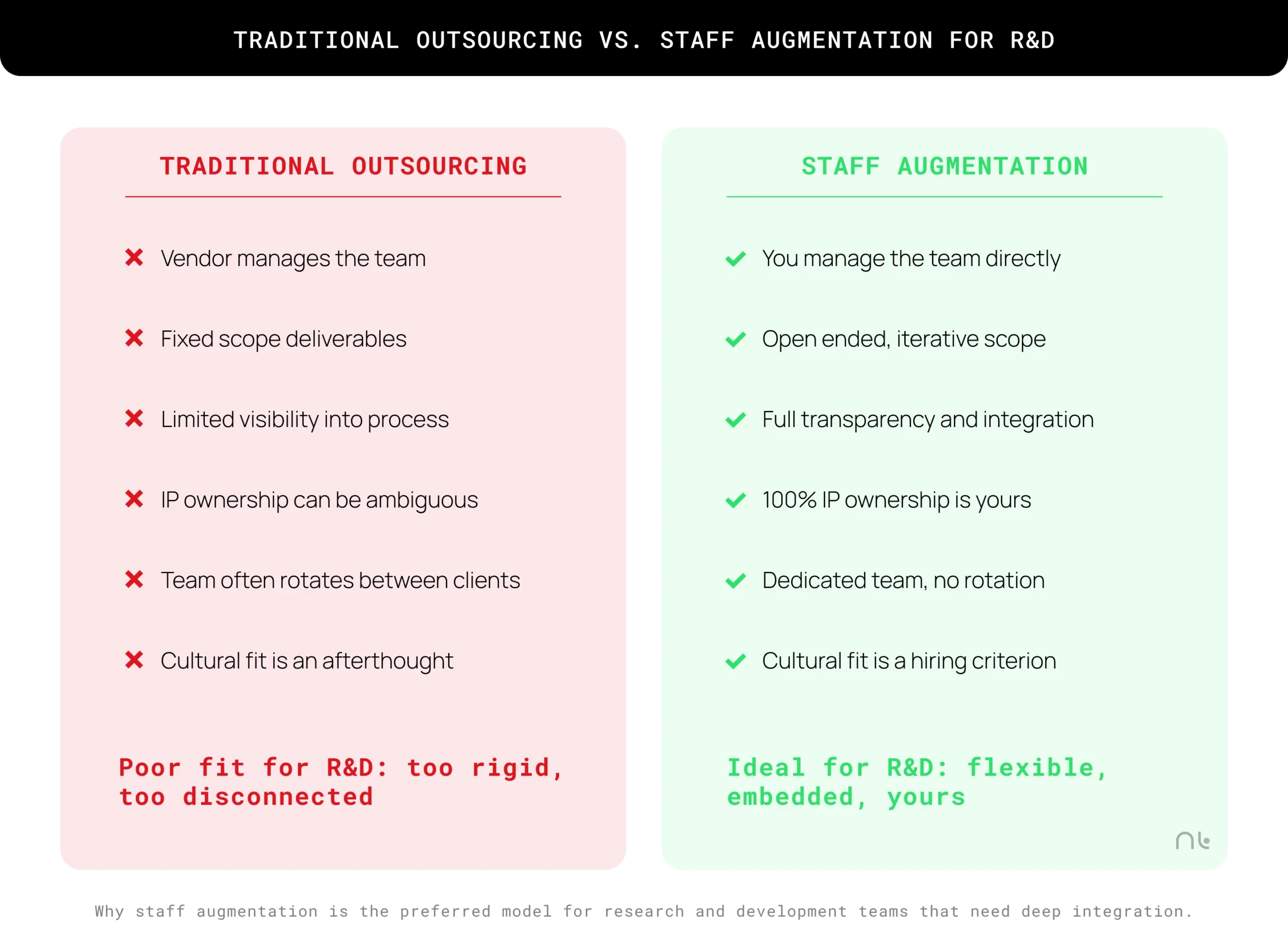
Figure 4: Why staff augmentation is the preferred model for research and development teams that need deep integration.
| 76% | Of companies’ report being directly affected by the IT talent shortage. The offshore development market is projected to reach $283 billion by 2031. [4][10] Building R&D teams internationally has become the standard operating approach, not an alternative. |
The methodology we use is based on four pillars that we have refined across 30+ client engagements since 2017. Each pillar addresses a specific failure mode we have seen in R&D team building.
We present first candidates within 5 to 10 business days. Full teams are typically operational in 2 to 4 weeks. Traditional in-house hiring takes 8 to 12 weeks per role.
The speed comes from our pre-qualified talent pipeline across 8 hiring hubs. But speed without quality is just noise. When one of our clients needed a Kotlin/Scala backend developer and had spent 3 months failing to find one through another vendor, we did not just move faster. We sourced candidates who matched both the technical requirements and client’s specific organizational culture. The first successful hire was described internally as a 101% match. That standard is not a marketing claim. It is the bar our recruitment team was held to on that engagement, and it is why the partnership expanded from one developer to 17+ across two countries.
Growing from 5 to 50+ developers is a common trajectory among our clients, that build global R&D center. Our enterprise client started in 2019 and scaled to 24 engineers. The HRTech company started in 2021 with one developer and grew to 17+ across Ukraine and Romania. A fintech client started in 2023 and reached 27 people. A leading SportTech company needed to enter a new market and we built a 25 person team in Bucharest covering software engineering, DevOps, QA, and project management.
Our retention rate across all engagements is 98%, with a replacement rate below 1%. Developers stay an average of 3.5 years. When a replacement is needed (rare), we provide one in 2 weeks versus the industry standard of 3+ months.
Retention at this level comes from treating augmented developers as professionals with career trajectories, not as interchangeable inputs. Our HR and account managers check in regularly, facilitate performance discussions, support professional development, and resolve friction before it becomes a resignation. For some clients, this included nurturing a hybrid remote culture that helped bring the distributed team together across countries. The developers at another project describe their project as engaging, with plenty of opportunities for professional growth, and praise the management’s open communication and mentoring. That environment does not happen by default. It is designed.
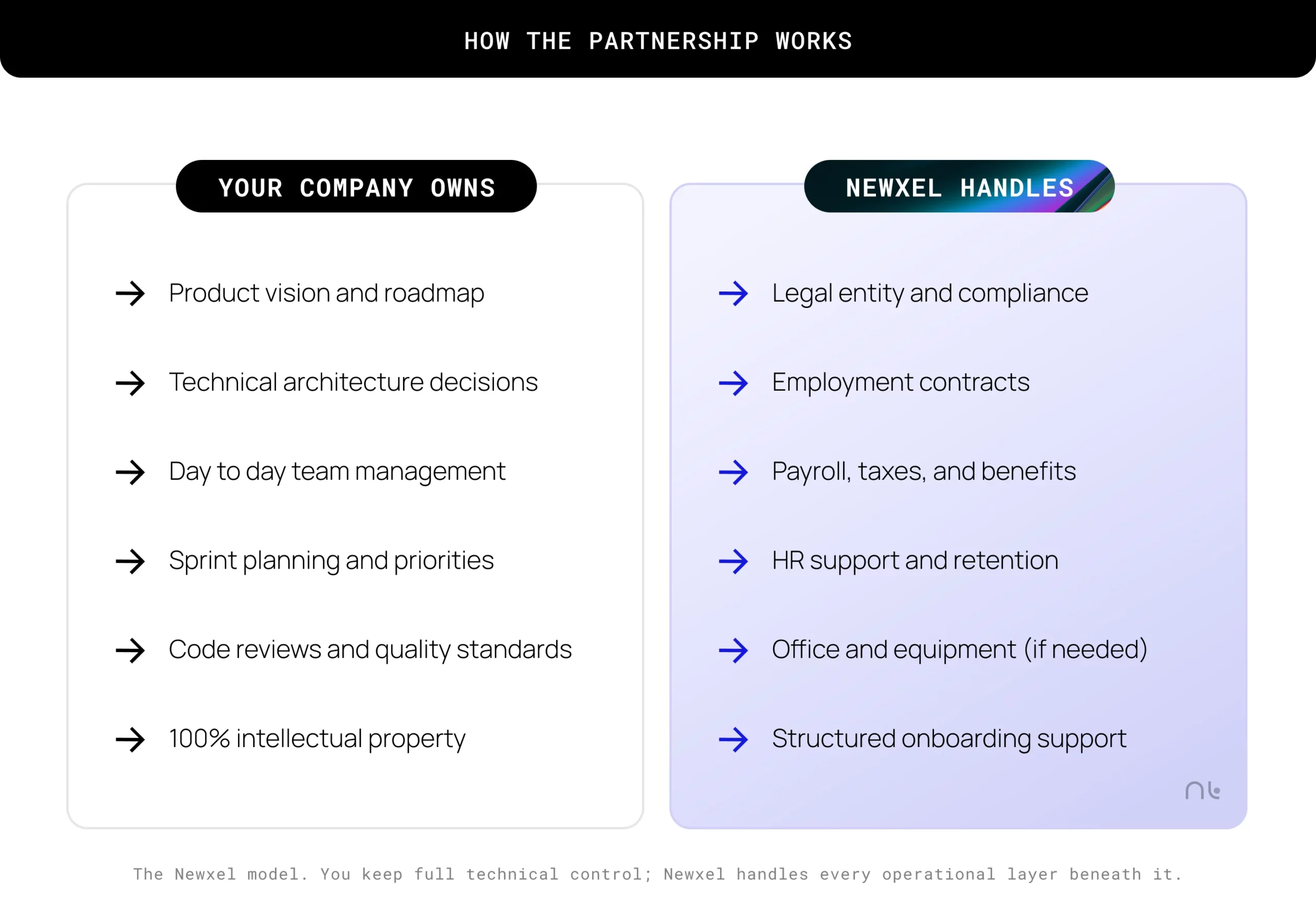
Figure 5: The Newxel model. You keep full technical control; Newxel handles every operational layer beneath it.
These are not theoretical risks. Each pattern below is something we have observed repeatedly across client engagements and prospect conversations of r and d department. Each one is expensive, and each one is avoidable.
Mistake 1: hiring for today’s needs only
SaaS companies in the $20M to $50M ARR range that do not plan ahead end up rebuilding their R&D organization every 18 months, burning through institutional knowledge each time. One of the client’s team lead who became an architect is the model we recommend: hire people who can grow with the work, not just execute the current ticket.
Mistake 2: Treating offshore R&D staff as cheaper headcount
If cost savings is the primary framing, the team will feel it. Developers talk to each other. They know when they are valued and when they are a line item. Our 98% retention rate exists because the developers we place feel like real team members, not budget optimizations. We explicitly coach our clients on this: the framing with your internal team should be talent access, not cost reduction.
Mistake 3: Skipping the onboarding investment
Companies that rush onboarding see 3x longer ramp up times and significantly higher turnover within the first 6 months. We know this from the data [research consistently shows the correlation], but more importantly we know it from the engagements where onboarding was done well vs. those where the client wanted to “Just get them coding.” At Newxel, our HR and account managers coordinate onboarding plans with your engineering leadership: your tech stack, codebase architecture, team rituals, communication norms. The investment is typically 2 weeks. The return is an engineer who is productive for years.
Mistake 4: Ignoring technical debt in R&D planning
EY’s research found that 45% of CTOs with declining revenue identified technical debt as their top unsolved R&D challenge, compared to 33% of CTOs with growing revenue. [8] We see this manifest in a specific way: when 100% of the R&D team’s capacity is allocated to new features, the codebase degrades, velocity slows, and the team becomes demoralized because they are spending increasing amounts of time fighting the system rather than improving it.
Mistake 5: No IP protection framework from day one
Intellectual property is the output of R&D. If you do not have clear IP assignment agreements, code ownership policies, and access controls in place before your team writes its first line of code, you are exposed. At Newxel, full IP assignment is built into every employment contract.
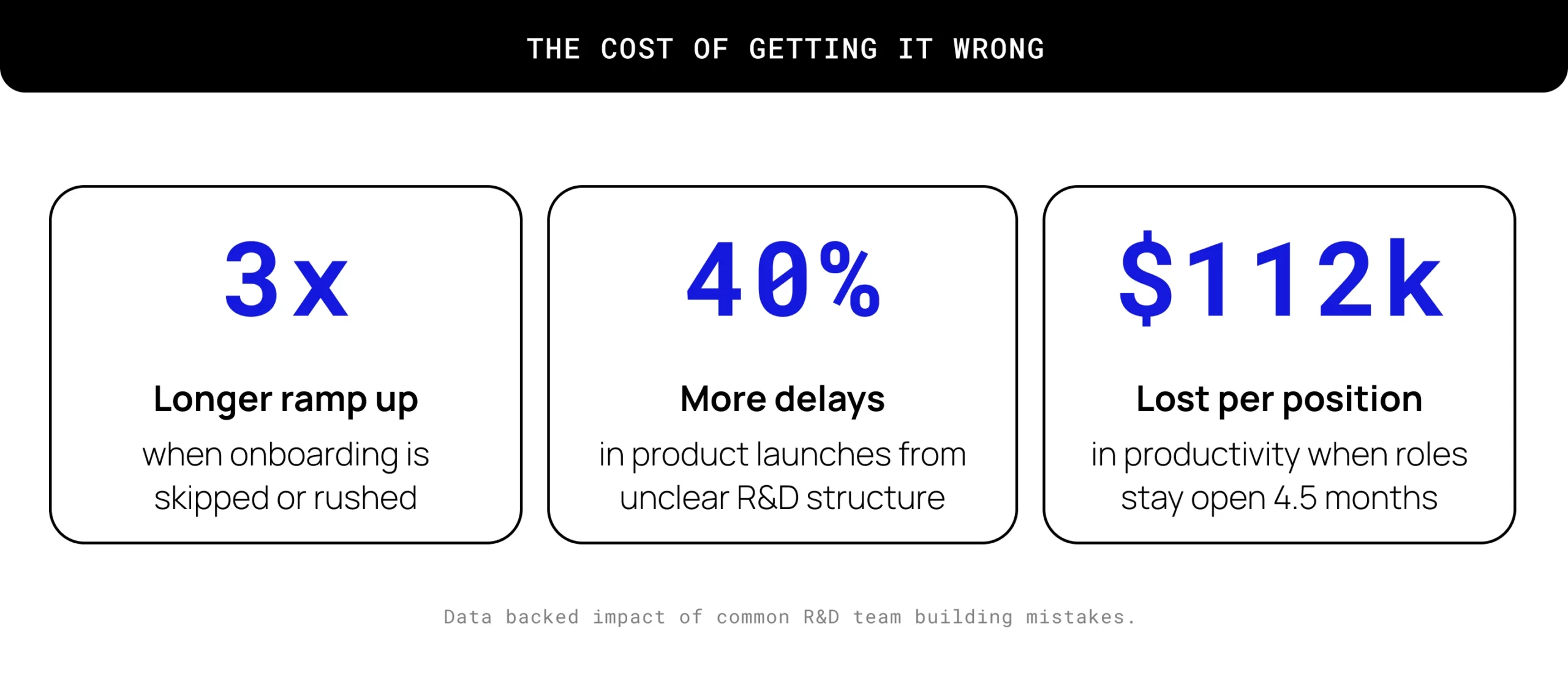
Figure 6: Data backed impact of common R&D team building mistakes.
How do you hold a research and development team accountable for output without squashing the exploratory, nonlinear nature of R&D work? We recommend layered metrics. No single KPI captures R&D performance, so use a balanced set that we have seen work across our client engagements.
Velocity and throughput metrics
Sprint velocity, cycle time, and deployment frequency tell you whether the team is operating at a sustainable pace. They do not tell you whether the team is working on the right things, but they flag dysfunction quickly. In our experience, the most useful velocity metric for distributed R&D teams is cycle time (from commit to production), because it captures not just coding speed but integration and review bottlenecks that remote teams are especially prone to.
Quality metrics
Defect density, test coverage, and production incident rates. Your R&D team should be producing better code than your feature teams, not worse. If quality metrics are declining, the team has over indexed on speed. Our enterprise client engagement is a good reference: because the team’s core mission was building an automation framework for QA, quality metrics were baked into the team’s identity from day one. That kind of alignment between team mission and measurement is what you should aim for.
Innovation metrics
Percentage of R&D output that reaches production. Number of prototypes tested per quarter. Time from concept to validated prototype. Research shows that organizations skilled at pipeline management achieve 90% project success rates, compared to 12 to 18% for those that are not. [11] The metric we find most useful in practice is the ratio of experiments started to experiment that reach customers. If your R&D team is running many experiments but none of them ship, the problem is not the team. It is the decision framework connecting R&D to product.
Business impact metrics
Revenue from products or features that originated in R&D. Reduction in time to market for new capabilities. Customer retention improvements tied to R&D driven enhancements. These are lagging indicators; they take 6 to 12 months to materialize. But they are the ultimate proof that your research and development department is worth the investment.
A practical rule: review velocity metrics weekly, quality metrics biweekly, innovation metrics monthly, and business impact metrics quarterly. This cadence gives your R&D team enough room to explore while maintaining strategic accountability.
Building an R&D department is one of the most consequential decisions a software product company makes. It determines whether you are leading your market or reacting to it. Whether your product evolves from a tool into a platform. Whether you attract engineers who build the future or compete for whoever is left.
You do not need to register foreign entities, navigate unfamiliar labor law, or spend six months setting up administrative infrastructure. With the right staff augmentation partner, you can build a fully integrated, culturally aligned research and development team in another country, one that operates as a natural extension of your headquarters team, in weeks.
We have done this for the enterprise providing the embedded solutions (24 person R&D center with a dedicated facility and automation framework), for HRTech customer (17+ person cross border team that expanded from one developer to three countries), for the data management company (a specialized squad that grew organically from a single team lead to an embedded engineering unit), for fintech client (a 9 person R&D division built from a single DevOps lead), and for dozens of other product companies across fintech, cybersecurity, gaming, and beyond.
The operational complexity is real, but it does not have to be yours. If you are ready to build, reach out to Newxel. We will help you define the team, find the talent, handle the complexity, and build an R&D center that actually ships.
Sources & data references
[1] WIPO Global Innovation Index, “End of year edition: global R&D spending 2024,” December 2025. wipo.int
[2] ITONICS Innovation, “Research and development guide,” 2025. itonics-innovation.com
[3] R&D World, “2024 R&D investment analysis: top 15 projected R&D spenders,” 2025. rdworldonline.com
[4] Qubit Labs, “The IT talent shortage in 2025.” qubit-labs.com; Second Talent, “Tech talent shortage statistics 2026.” secondtalent.com
[5] Insight Partners, “R&D insights from 250+ scaleup companies,” February 2024. insightpartners.com
[6] McKinsey & Company, “The present focused, future ready R&D organization.” mckinsey.com
[7] Pave, “R&D org structure benchmarks.” pave.com
[8] EY, “Focus areas for scaling effective R&D software development teams,” 2024. ey.com
[9] BCG, “Executive perspectives: AI powered R&D,” February 2025. bcg.com
[10] Qubit Labs, “What is ODC: offshore development center.” qubit-labs.com
[11] Ruijie Networks, “How to build fast custom R&D teams.” ruijie.com; Full Scale, “The great developer shortage 2025.” fullscale.io