7 Best Countries for Offshore Software Development in 2026
13 min
· March 17, 2026
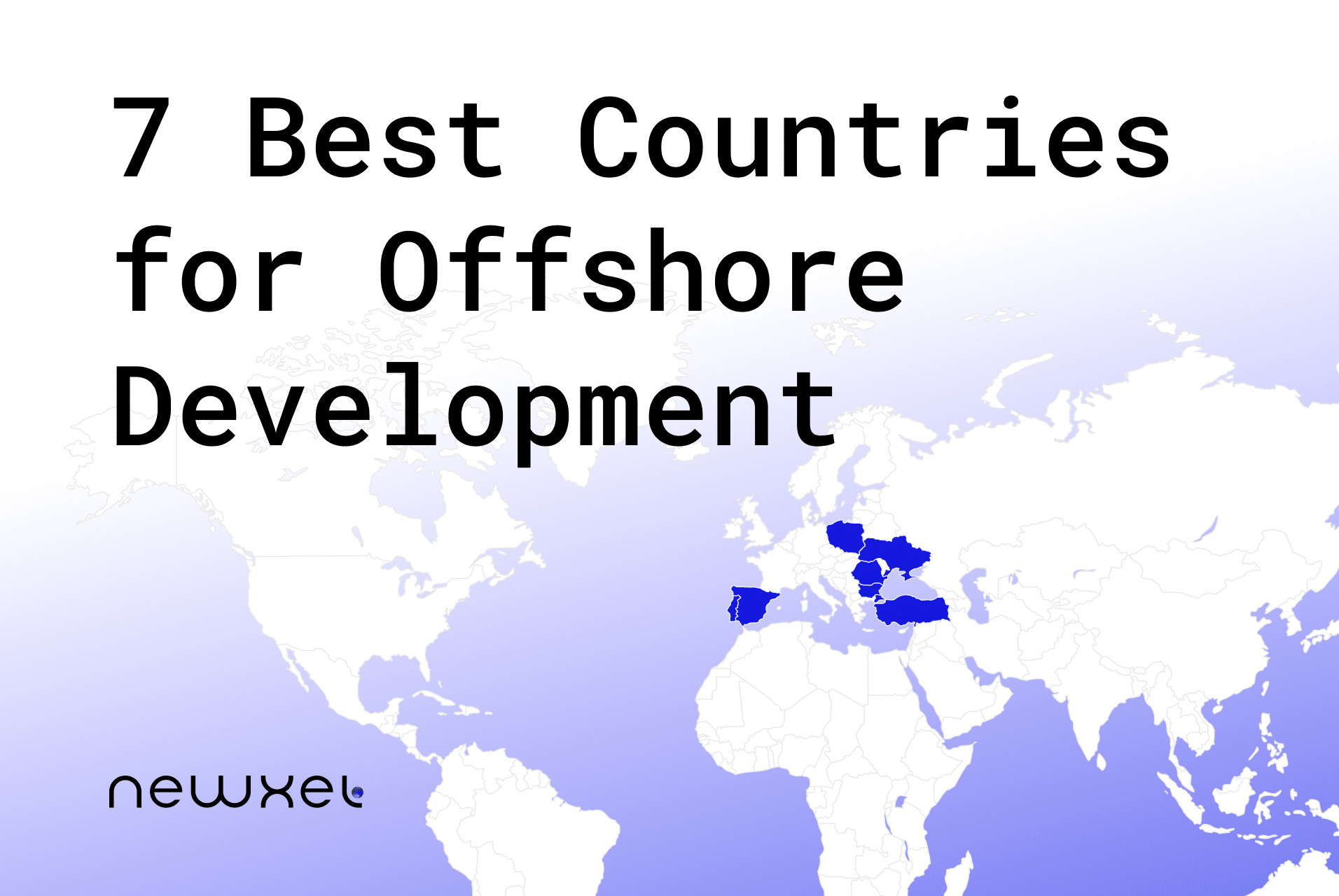
Germany, Poland, or Spain… what is the best place for offshore software development? What are the real offshore software development rates by country, what does it actually take to set up a team, and how do developer skills compare across markets?
We’ve been building offshore software development teams since 2017. Over eight years, we’ve explored markets across Europe, the UK, the US, and Asia, placing teams, learning from failures, and collecting hard feedback from real clients. This list is the result of that experience.
But we’re not asking you to take our word for it. Every country on this list is backed by independent research and global industry data, not just our own cases.
We evaluated each market against three factors that actually determine success: price, quality, and talent availability. Everything else, time zones, language, culture fit, flows from getting these three right.
So, let’s break down the seven best countries for offshore software development in 2026, and what makes each one worth your attention.
Before we dive into the country-by-country guide, let’s take a quick look at average offshore development rates across regions.
Spoiler:
Outsourcing to Eastern Europe, Asia, Latin America, or Africa can cut offshore software development cost by 2–5× compared to hiring in Western Europe or North America, all while tapping into highly skilled tech talent.
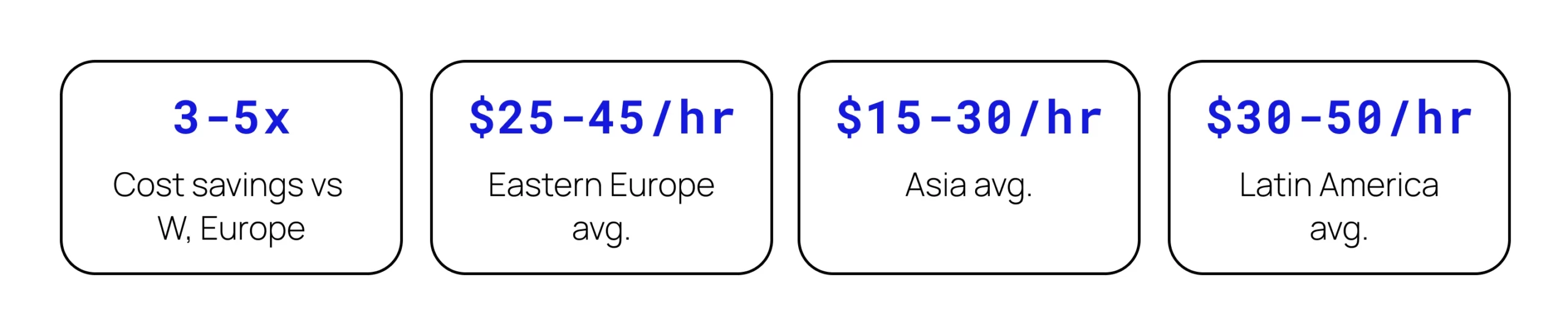
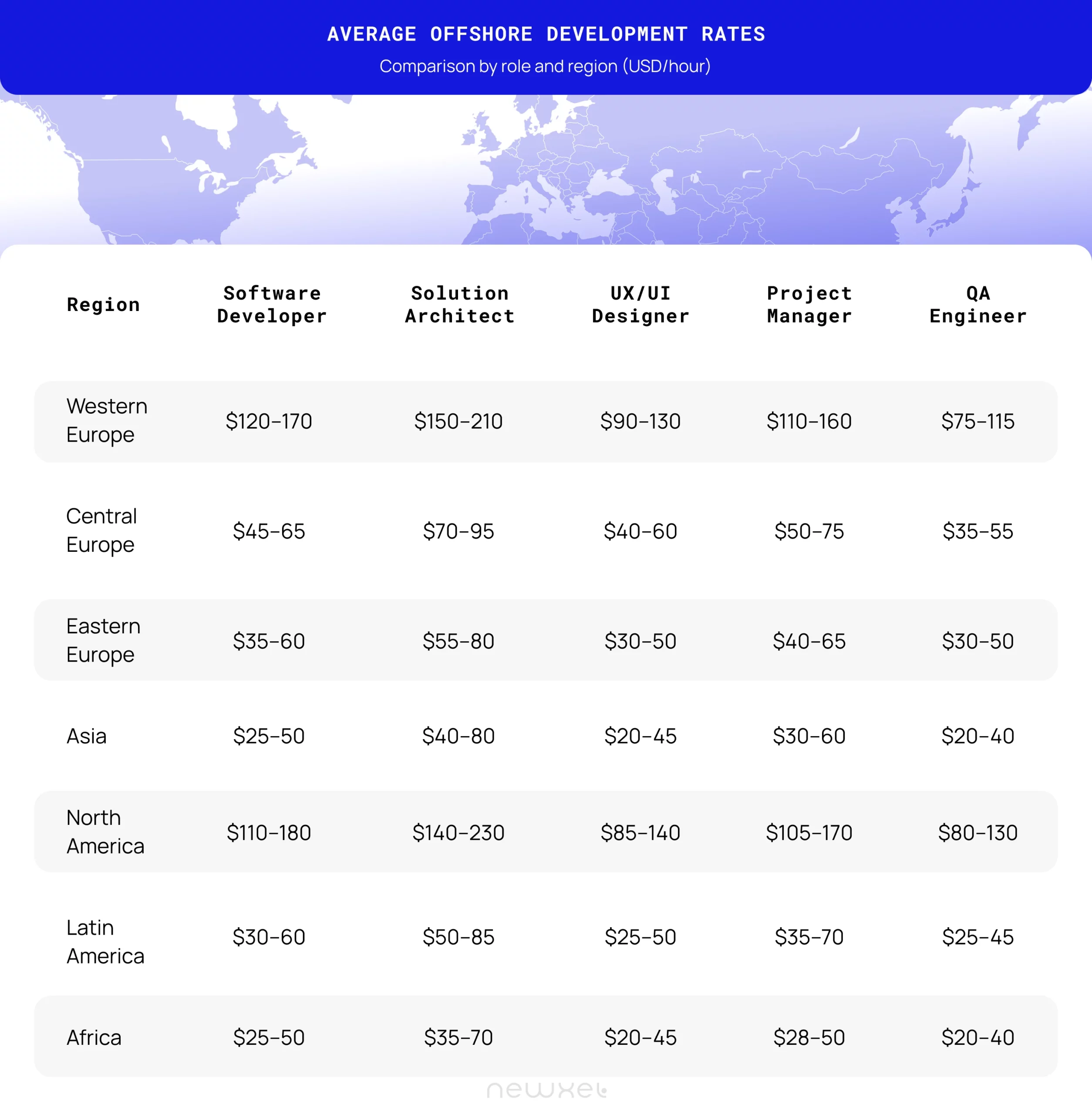
Now, let’s explore the key roles: software developers, solution architects, UX/UI designers, project managers, and QA engineers, and see how their offshore software development rates by country compare across regions, from Western Europe to Africa and the Americas.
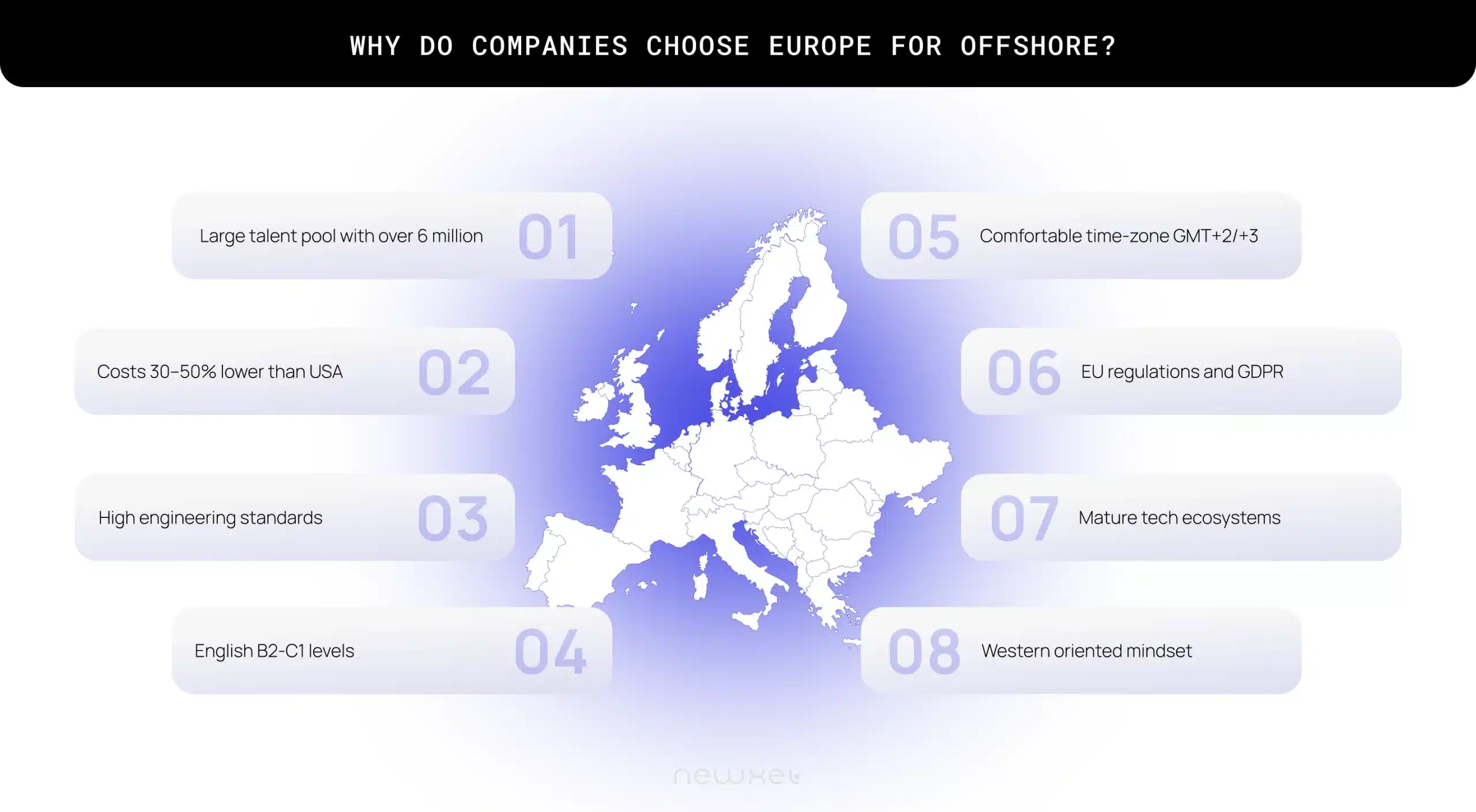
Among all offshore regions, Europe, particularly Central and Eastern Europe, has become one of the most attractive destinations for building remote engineering teams. Several key factors explain this trend:
Large talent pool
Europe has over 6 million software developers, with a significant concentration in Central and Eastern Europe, providing companies with deep and diverse engineering expertise.
Costs 30–50% lower than the U.S
Hiring developers in Europe can reduce development costs by 30–50% compared to the United States, while maintaining strong technical quality.
High engineering standards
European developers benefit from strong STEM education and rigorous technical training, making them well suited for complex enterprise and product development.
Strong English proficiency
Most engineers in major tech hubs operate at B2–C1 English levels, enabling smooth collaboration with international teams.
Comfortable time-zone overlap
Countries in Central and Eastern Europe operate around GMT+2 / GMT+3, providing convenient overlap with both Western Europe and parts of the U.S. working day.
EU regulations and GDPR compliance
Many European countries operate under EU legal frameworks, offering strong data protection and intellectual property safeguards.
Mature tech ecosystems
Cities like Warsaw, Kraków, Bucharest, Barcelona, and Lisbon have developed thriving tech hubs with startups, global R&D centers, and experienced engineering communities.
Western-oriented business mindset
European engineers often share similar work culture, communication style, and project management practices with Western companies, making collaboration more efficient.
These factors make Europe one of the most balanced destinations for software development offshore companies, combining quality engineering, reasonable costs, and reliable collaboration environments.
Before choosing the most suitable country for offshore software development, it’s essential to answer a few key questions honestly. This helps define scope, timelines, budgets, and the right market fit.
The answers you provide will directly influence which country is the best fit for your offshore software development project. Here are the key questions your company should answer before making a decision:
Are you building a simple web app, a complex enterprise solution, or an AI-driven platform? For example if you need a highly specialized AI or ML platform may be best suited for countries like Poland, Ukraine, or Romania where talent in advanced software architecture is strong.
Do you need developers proficient in JavaScript, Python, mobile, cloud architecture, or emerging technologies? For standard web or mobile development, other offshore regions may be more cost-effective, but Europe offers the best offshore software development countries for high-skill roles.
Consider not only hourly rates but also management, communication, and infrastructure costs. Regions like Eastern Europe often offer offshore development rates 2–5× lower than Western Europe or North America.
How quickly do you need your project delivered? Some regions may offer faster ramp-up times than others. Nearshore countries in Latin America like Brazil, Mexico, or Argentina can help with faster delivery due to time-zone alignment.
Will your team require daily stand-ups, frequent reporting, or more autonomous work?
Consider data protection, intellectual property laws, and industry-specific regulations in each country.
Close time zones can make collaboration easier, while distant ones may require more asynchronous workflows. For seamless real-time collaboration with the U.S., Latin America is often a better fit than Asia or Africa.
Answering these questions gives a clear framework for selecting the top offshore software development countries and assembling the best offshore developers for your team.
Poland is widely regarded as the go‑to European offshore hub. It’s not the cheapest but it combines excellent technical quality, strong English proficiency, and a very mature talent ecosystem.
| Mid-level rate | IT professionals | IT graduates/year | HackerRank global ranking |
| $35-55/hr | 330,000+ | ~15,000 | Top 3 |
Why Polish offshore development stands out:
Poland has built one of the most mature offshore ecosystems in Europe over 25+ years. Major tech hubs in Warsaw, Krakow, Wroclaw, Gdansk, and Lodz offer deep talent reserves across every major stack. The country’s strong mathematical and engineering education tradition means developers aren’t just technically capable – they’re analytical problem-solvers with genuine depth.
Poland consistently ranks in the top 3-5 globally on HackerRank’s developer skills assessments. Multinational R&D centres from Google, IBM, Samsung, and Motorola have operated here for decades – which has raised the bar for the entire market and created a pipeline of engineers who understand global delivery standards.
| Pros | Cons |
|
|
Explore how to set up R&D center in Poland in our latest article.
Ukraine remains one of the world’s strongest offshore markets despite geopolitical challenges, with a massive talent pool and exceptional technical expertise. Developers often rank high in global skill indices thanks to strong programming fundamentals and competitive programming culture.
| Mid-level rate | IT professionals | IT graduates/year | HackerRank global ranking |
| $25-45/hr | 285,000+ | ~36,000 | Top 5 |
Why Ukrainian offshore market stands out:
Ukraine has a decades-long tradition of elite technical education, with universities historically emphasising mathematics, algorithms, and CS fundamentals. The result is a developer community that consistently punches above its weight in competitive programming and complex engineering.
Despite the war, the Ukrainian IT sector has shown remarkable resilience – over 90% of IT companies remained operational after February 2022, with many engineers relocating to western Ukraine, Poland, or other EU countries while continuing to work for existing clients. Remote delivery protocols have actually matured: companies now routinely maintain distributed Ukrainian teams across multiple locations as a risk management strategy.
| Pros | Cons |
|
|
Romania often flies under the radar, but its growing developers, strong educational pipeline, and increasing presence of multinational R&D centers make it a robust choice especially for EU‑based businesses.
| Mid-level rate | IT professionals | IT graduates/year | Full legal & data compliance |
| $30-50/hr | 130,000+ | ~10,000 | EU Member |
Why you should try Romanian offshore development:
Romania has a strong technical education tradition, and its universities produce engineers with solid fundamentals. Cluj-Napoca – often called the Silicon Valley of Romania – hosts R&D centres from Bosch, Continental, Ubisoft, and Nokia, which is a clear signal of the talent ceiling available.
What sets Romania apart is its combination of EU legal guarantees and rates typically 10-20% lower than Poland. For companies where GDPR compliance and IP protection are non-negotiable, Romania offers much of what Poland does – at a slight discount.
| Pros | Cons |
|
|
Bulgaria’s position as the most cost‑effective EU market is hard to beat. Developers are solid across enterprise and web stacks, and Sofia’s tech scene continues to mature.
| Mid-level rate | IT professionals | IT graduates/year | Dev cost among EU members |
| $25-45/hr | 55,000+ | ~5,000 | Lowest |
Why Bulgaria stands out:
Sofia’s tech scene has matured steadily over the past decade. While the talent pool is smaller than Romania or Poland, quality is consistent for mainstream enterprise and web development work. Operations from VMware, SAP, and Hewlett Packard provide a real benchmark for talent standards – and confirm that quality delivery is achievable here.
Bulgaria’s cost advantage within the EU is structural: lower wages, lower living costs, and lower employer overhead than all Western European countries. For companies that need EU legal guarantees but want to push the cost envelope, it’s the most rational choice on this list.
| Pros | Cons |
|
|
Spain isn’t the cheapest, but for companies that value cultural proximity, excellent English in tech hubs, and EU legal standards, it hits a unique sweet spot. Madrid and Barcelona pump out frontend, UX, mobile, and cloud talent.
| Mid-level rate | IT professionals | IT graduates/year | Cheaper than UK/Germany |
| $40-65/hr | 200,000+ | ~20,000 | 30-40% |
Why Spain popular for offshore development
Spain’s tech talent is strong in web technologies, UX/UI, mobile, and cloud-native products. Barcelona and Madrid have mature startup ecosystems – the concentration of product-minded, agile-native engineers is genuinely high. This translates to teams that integrate naturally with Western European and US product organisations.
The post-2020 remote work expansion made Spanish talent more accessible than ever. Engineers who previously only considered local employers are now open to international engagements – creating a real opportunity for companies that move quickly on talent.
| Pros | Cons |
|
|
Portugal, especially Lisbon and Porto, has transformed into an energetic tech hub with cosmopolitan talent. Developers here excel in agile environments and web/cloud stacks.
| Mid-level rate | IT professionals | IT graduates/year | English proficiency, Southern Europe |
| $35-55/hr | 70,000+ | ~8,000 | Top 3 |
Why Portugal stands out
Portugal’s tech scene benefits from an unusual combination: strong domestic talent, an influx of international engineers attracted by quality of life and tax incentives, and a genuinely agile, product-focused work culture. Engineers here tend to be more startup-native than in more corporate markets like Poland – which makes them a strong fit for product companies that value speed, flexibility, and ownership.
Lisbon and Porto both have credible tech ecosystems. Porto in particular offers better value – strong talent, lower competition, and more moderate salaries. For UK-based companies specifically, the WET time zone (GMT/BST) is essentially perfect.
| Pros | Cons |
|
|
Turkey’s large population of CS graduates and rapidly growing tech community make it an excellent option for teams needing volume and cost efficiency. Istanbul and Ankara are particularly dynamic.
| Mid-level rate | IT professionals | IT graduates/year | English proficiency |
| $25-45/hr | 150,000+ | ~60,000 | Top 4 |
Why Turkey stands out
Turkey has the largest CS graduate pipeline of any country on this list – roughly 60,000 IT graduates per year, significantly more than any EU country here. This creates genuine scale: if you need to staff a 50-100 person engineering team in a short timeframe, Turkey has the raw numbers to make it feasible.
Rates are competitive with Ukraine and Bulgaria, making Turkey attractive for cost-sensitive mandates. The tech scene in Istanbul has grown quickly, with an expanding startup ecosystem and increasing exposure to international delivery standards.
| Pros | Cons |
|
|
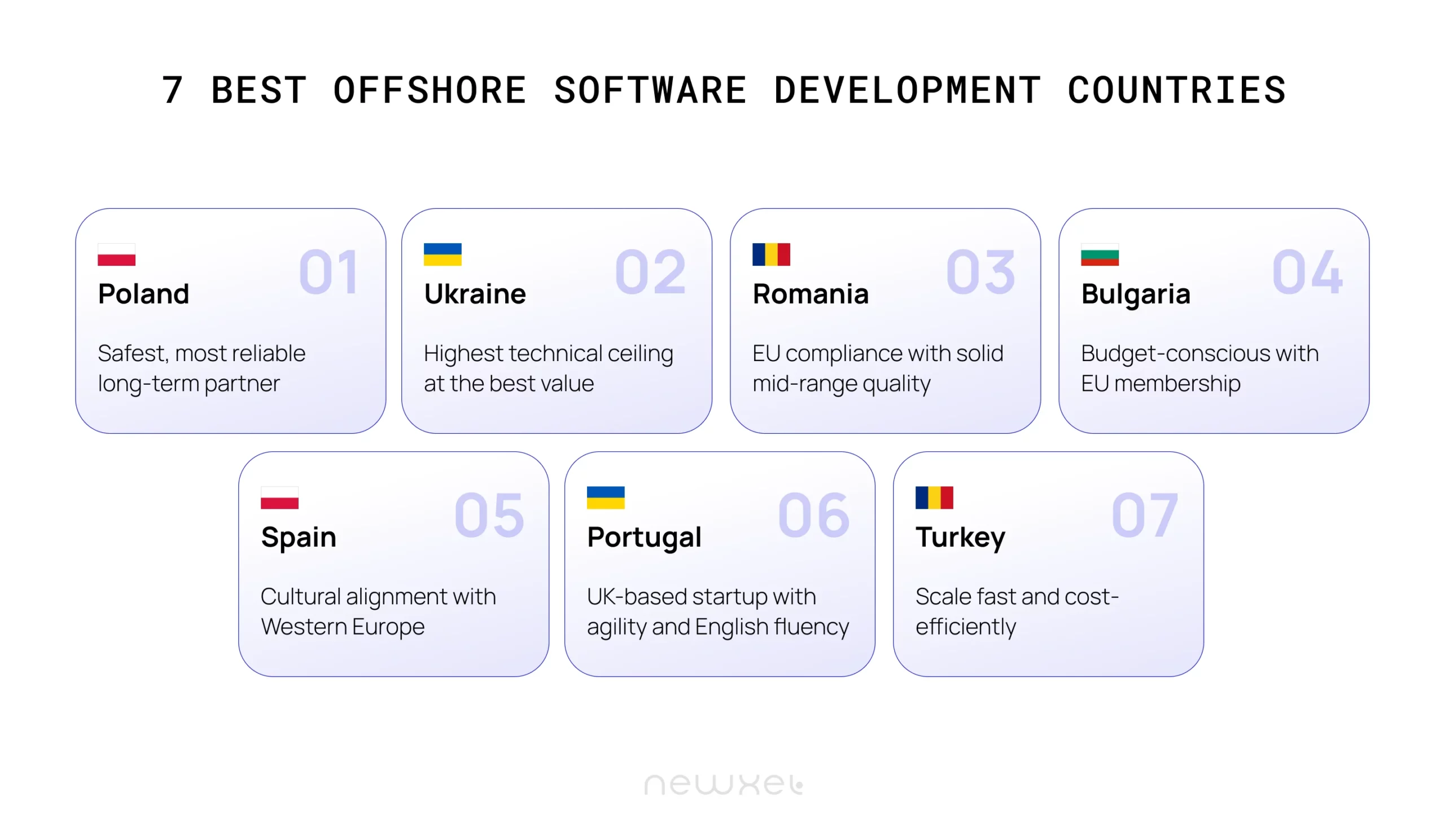
There is no single “best” country for offshore software development. The right choice depends on your priorities:
All seven markets have delivered results for real clients. Success rarely depends on the country alone, it comes down to team selection, engagement clarity, onboarding, and communication setup. If you’d rather skip the guesswork, you can hire an offshore development team and let an experienced partner match you with the right talent pool for your priorities.