Strategic Recruitment: How to Build a Winning Hiring Process Strategy in 2026
18 min
· March 30, 2026
There is a moment in the life of every growing company when hiring shifts from something the founders handle over coffee to something that needs its own infrastructure. Maybe the team just closed a funding round, and the board expects 40 new hires by year-end. Maybe the product roadmap calls for capabilities nobody on the current team has. Maybe revenue targets demand a sales organization that simply does not exist yet.
Whatever the trigger, the pattern tends to be the same: companies that have been hiring well enough on instinct suddenly need a system. And the ones that build that system early tend to scale more smoothly, retain people longer, and spend less time fixing hiring mistakes down the road.
That system is what we mean by strategic recruitment. Not recruitment as a series of job postings and interviews, but recruitment as an organizational capability, one that connects every hiring decision to the company’s broader direction and makes the whole process measurable, repeatable, and continuously improving.
This article walks through what strategic talent management looks like in practice. We will cover the core components of a strategic hiring process, how companies at different stages adapt their approach, the most common mistakes that derail scaling efforts, and where a partner like Newxel fits into the picture. The insights here draw on Newxel internal research, operational hiring data from technology companies across multiple markets, and external findings from SHRM, the World Economic Forum, and leading industry analysts. The aim is practical: to give you something you can use, whether you are designing your hiring system from scratch or rethinking the one you have.
At its simplest, strategic recruitment is a way of thinking about hiring that starts with the business, not the job requisition. Instead of waiting for a vacancy to appear and then scrambling to fill it, a strategic approach begins upstream: what does the company need to accomplish in the next 12 to 18 months, and what kind of team makes that possible?
In a traditional setup, recruitment begins when a role opens and ends when someone signs an offer. The focus is transactional: source, screen, interview, offer, done. There is nothing inherently wrong with that workflow, but it only works well on a small scale, with a handful of familiar roles in a stable environment.
Strategic hiring management broadens the frame. It starts with workforce planning that ties headcount to product milestones and revenue goals. It includes role prioritization, so the hiring team knows where to focus when there are 30 open requisitions and bandwidth for 10. It introduces structured interviews, evaluation rubrics, and calibration sessions that make each hiring decision more reliable and less dependent on individual instinct. And it extends past the offer into onboarding and early retention, because a hire only creates value if the person stays and performs.
Why does this distinction matter now? Because the hiring landscape has gotten harder. SHRM reported in 2025 that 69% of organizations still face difficulties recruiting for full-time positions, a number that has barely moved since 2016. The World Economic Forum’s Future of Jobs Report 2025 found that 63% of employers see skills gaps as the single largest obstacle to business transformation through 2030. Posting more job descriptions will not solve either of those problems. A different operating model will.
Hiring shapes everything. Product velocity, customer experience, team morale, the company’s ability to enter new markets. Every person who joins changes the trajectory a little. And when a lot of people join at once, the trajectory can shift significantly, for better or worse.
When hiring operates in isolation from business strategy, a predictable gap opens up. Engineering builds a team optimized for the product as it existed 6 months ago, not the product the company is building now. Sales hires people with the right industry background but the wrong selling style. Operations adds project managers who are strong individual contributors but lack the cross-border coordination skills the next growth phase requires. The roles get filled. The headcount numbers look right. But something is off, and it usually takes a quarter or two before leadership can pinpoint what.
The research tells a consistent story here. SHRM’s 2025 Talent Trends report found that over a third of organizations now train existing employees for hard-to-fill roles, a signal that external hiring on its own is not keeping up with the pace of changing business needs. Their 2025 Recruiting Executives Benchmarking data put the average time-to-fill at roughly 6 weeks, with executive cost-per-hire up 113% since 2017. Those are significant numbers. They point to a hiring environment where reactive approaches are becoming more expensive and less effective each year.
A strategic hiring process reframes the entire conversation. Instead of asking “Who can we get for this role?” the question becomes “What does this role need to accomplish, how does it connect to the company’s priorities, and what kind of person will thrive in that context?” When the starting point changes, so do the outcomes.
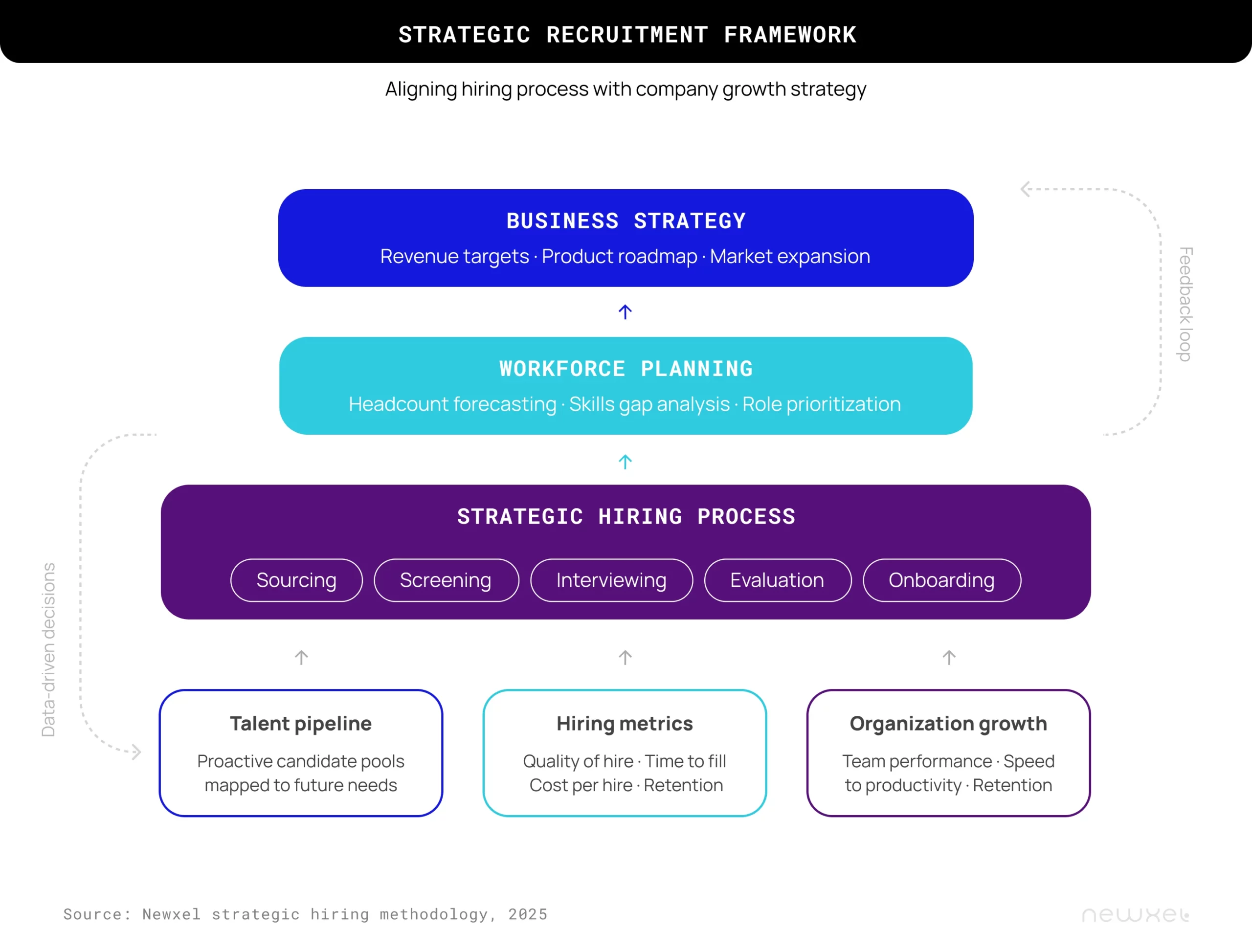
Figure 1: Strategic recruitment framework aligning hiring process with company growth strategy
This is where strategic talent recruitment begins, and where most companies skip ahead too quickly. Workforce planning means translating what the business is trying to achieve into specific people, skills, and timelines. It requires the CEO, product leads, and finance to sit down together and answer a few grounding questions: where is the company headed over the next 6 to 18 months? What capabilities do we need to get there? And what can we realistically afford?
From those answers, the talent acquisition team builds a hiring forecast that maps roles to priorities, timelines, and budget. It sounds straightforward, but the majority of growing companies skip this step entirely. Headcount gets approved in response to immediate pressure instead of planned need, which leads to bursts of hiring that leave some teams overstaffed and others still waiting for critical roles to be filled months later.
When 30 roles are open and the hiring team has bandwidth for 10, somebody has to decide what comes first. Without a clear framework for that decision, the default is politics: whoever pushes hardest gets their role filled first, regardless of whether it has the most business impact.
Good role prioritization is based on a few straightforward criteria: which roles directly affect revenue, product delivery, or customer retention? Which ones have the longest lead times or the hardest-to-find skill sets? Where is the organization most exposed if a position stays vacant another month? When these questions are answered openly, it creates alignment. Hiring managers understand why certain roles are sequenced ahead of theirs, and the process earns trust instead of generating friction.
If there is one area where most hiring processes could improve immediately, it is interviews. Unstructured interviews, the kind where each interviewer asks whatever comes to mind, have been shown again and again to be poor predictors of on-the-job performance. Yet they remain the default nearly everywhere.
A structured approach uses competency-based questions, standardized scorecards, and calibration sessions so that every candidate is evaluated against the same criteria by every interviewer. This does not make the conversation rigid or scripted. It means the hiring team agrees in advance on what good looks like for a given role, and each interview is designed to gather specific evidence against those criteria. The result is better signal, less noise, and a much more defensible hiring decision.
Strategic hiring management means looking beyond the interview itself. Reference checks, work sample assessments, and practical simulations all add signal. A 45-minute conversation can only tell you so much. Seeing how someone approaches a realistic problem, or hearing from people who have worked with them before, fills in gaps that even a well-structured interview will leave.
The key is to respect the candidate’s time. The best evaluation frameworks gather high-quality information efficiently, without subjecting people to a 6-week, 10-interview marathon that tests patience more than competence.
You cannot improve what you do not measure. The most useful recruitment metrics go well beyond the basics of time-to-fill and cost-per-hire. Quality of hire, typically measured through first-year performance and retention, tells you whether the process is delivering people who perform. Offer acceptance rate reveals how competitive the company’s positioning is. Source effectiveness shows which channels produce the strongest candidates, not just the most. And hiring manager satisfaction surfaces whether the internal customers of the hiring process feel it is working.
HR.com’s 2025 Future of Recruitment Technologies report found that only 43% of organizations consider their talent acquisition technology stack “good” or “excellent.” That gap between tool adoption and perceived value usually comes down to measurement. Companies invest in systems but do not build the feedback loops needed to learn from them.
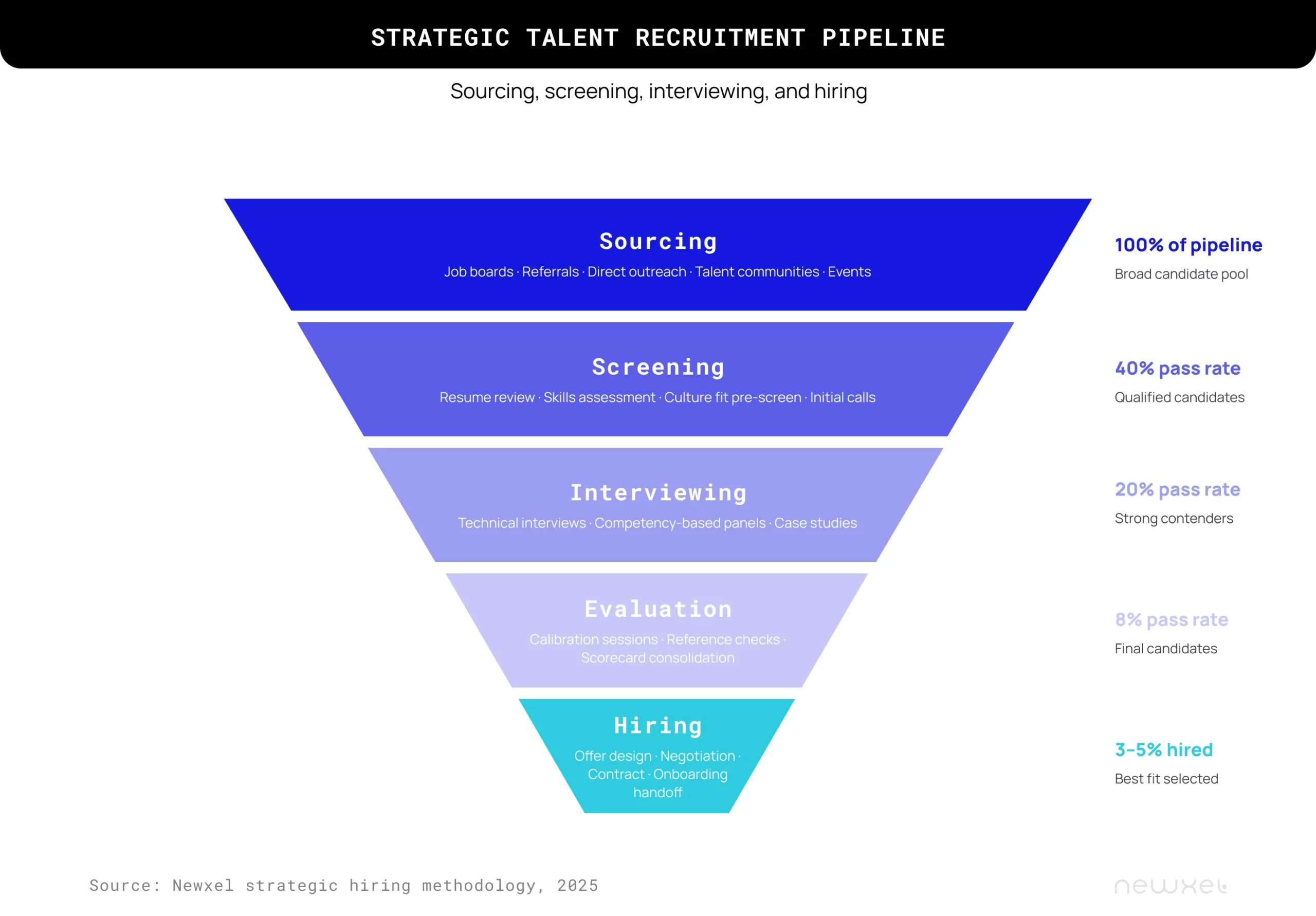
Figure 3: Strategic talent recruitment pipeline showing sourcing, screening, interviewing, and hiring
One of the biggest mindset shifts in strategic recruitment is moving from vacancy-driven hiring to pipeline-driven one. In the first model, the process starts at zero every time a role opens. In the second, the company maintains an ongoing relationship with qualified candidates, so that when a position opens, there are already warm leads in the pipeline.
This takes consistent work across several fronts. Employer branding is the foundation: the company needs to be visible and compelling to the kinds of people it wants to hire, long before any specific role is live. That means showing the world what it is like to work there, through content, events, and community involvement. Showcase the real insight into the technical problems the team is solving and the culture they have built.
Sourcing is the next layer. The strongest pipeline strategies are targeted, not broad. They focus on building genuine relationships with specific individuals who match the company’s needs, through direct outreach, industry communities, referral networks, and events. Broad job board postings have their place, but they rarely surface the best candidates for critical roles.
Then there is nurturing, which is where most companies drop the ball. They identify a strong candidate, but because no role is open right now, the relationship goes cold. 6 months later, when a perfect role finally opens, they are back to sourcing from scratch. Maintaining contact with warm candidates through periodic check-ins, relevant content, and personal touchpoints costs very little and pays off significantly when timing finally aligns.
The numbers back this up. Referral hires are typically brought on 55% faster than those sourced through open postings, and they tend to stay longer. Companies that invest in employer branding have reported up to 50% reductions in cost-per-hire. These are not incremental gains. They represent a real structural advantage in markets where strong candidates have multiple options.
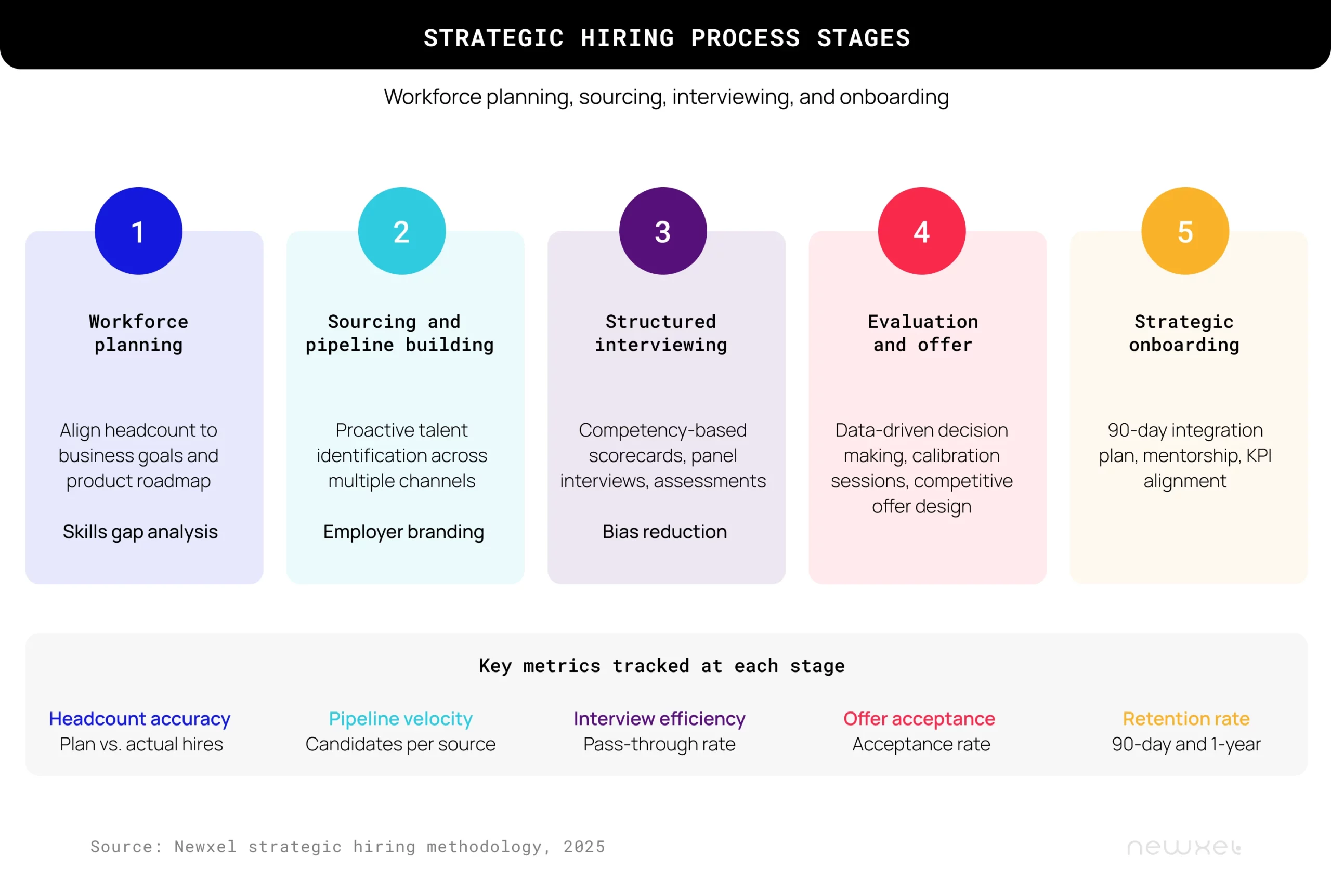
Figure 2: Strategic hiring process showing workforce planning, sourcing, interviewing, and onboarding
How a company hires at 20 people is fundamentally different from how it hires at 200, and different again at 2,000. The principles remain consistent, but the way they are applied must change with the organization’s complexity.
The post-funding hiring surge is where many startups encounter strategic recruitment for the first time, often because they have no choice. A founding team that made every hire personally now faces 30 or 40 open roles with a board expecting rapid execution. The interview process that worked when everyone knew everyone breaks down when the candidate volume doubles every month.
The startups that handle this well tend to invest in 3 things before the surge begins: a clear prioritization framework, so the team knows which roles matter most, structured scorecards that keep interviews consistent even as new interviewers are added to the rotation, and a dedicated hiring lead, internal or through a partner, who owns the operational rhythm. The companies that wait until they are already behind almost always pay for it in quality, and the consequences take 6 to 9 months to fully show up.
International expansion introduces complexities that are easy to underestimate from headquarters. Employment regulations differ by country as well as compensation expectations that vary widely. The sourcing channels that fill your pipeline in one market may produce nothing in another. And the talent profile you need locally may not map neatly onto what has worked in your home market.
Talentful’s 2025 research found that 56% of talent acquisition teams cannot plan more than 3 to 6 months ahead, and 11% cannot plan at all. For companies moving into new geographies, that short planning horizon creates real risk. A strategic approach to international hiring starts months before the first role is posted, with advance research into local labor markets, regulatory environments, and compensation benchmarks, ideally with the guidance of a local talent partner who already knows the landscape.
At enterprise scale, strategic hiring management becomes a governance question. How do you maintain consistent quality and evaluation standards across regions, while adapting to local markets in sourcing, compensation, and employer brand? The answer usually involves standardized processes and shared scorecards at the core, with enough local flexibility to remain competitive in each hiring market.
The World Economic Forum’s 2025 findings add another layer. With 85% of employers planning to prioritize upskilling and 39% of workers’ core skills expected to change by 2030, large organizations cannot think about hiring in isolation. Strategic talent recruitment at scale increasingly means integrating external hiring with internal mobility, upskilling, and succession planning into a single workforce system.
Knowing what to build is half the picture. Knowing what to avoid is the other half. These are the patterns we see most often when companies try to scale without a strategic framework in place.
This is the most widespread and most costly pattern: hiring that only begins when someone leaves or a new project launches. It creates a cycle where the team is always chasing vacancies, quality standards slip because of time pressure, mis-hires accumulate, and the same roles open again a few months later. SHRM’s longitudinal data shows that recruiting difficulties have stayed at historically high levels since 2022. The organizations hit hardest are the ones still operating in reactive mode.
When a hiring manager cannot clearly describe what success looks like in a role, everything downstream suffers. Each interviewer evaluates candidates against their own private criteria, feedback is inconsistent and hard to compare, and the final decision often comes down to personal chemistry rather than evidence. Taking the time upfront to define what the role needs to accomplish, and what good performance looks like at 6 and 12 months, is one of the highest-leverage investments a hiring team can make.
Without a shared prioritization framework, the loudest voice in the room determines which roles get filled first. Over time, this creates real imbalances. One department is overstaffed while another is stretched thin, and the hiring team loses credibility because the process feels arbitrary. The fix is simple in principle: agree on criteria, rank the roles, share the reasoning. Execution takes discipline, but the alternative is more expensive.
Long, repetitive interview loops where candidates meet 8 or 10 people over several weeks are a reliable way to lose the best people. Industry data suggests that strong candidates are typically available for about 10 days before accepting an offer elsewhere. A strategic process compresses the timeline by running interview stages in parallel, using focused rounds with clear assignments for each interviewer, and maintaining tight feedback cycles. Speed and quality are not opposites. With good design, you get both.
This is one of the least discussed but most consequential mistakes. Many decision-makers approach external talent partners expecting a fully managed vendor relationship: hand off a brief, receive a deliverable. Team extension, or outstaffing, works on a fundamentally different principle. It provides dedicated professionals who integrate into the client’s own teams, follow the client’s processes, and report to the client’s management. The client keeps full control. The partner provides the hiring infrastructure, legal compliance, and operational support.
Companies that misunderstand this distinction often choose the wrong engagement model and end up dissatisfied, not because the talent was wrong, but because the structure was. Taking the time to understand what you need, more control or less, and matching the model accordingly, avoids a lot of frustration.
Another common miscalculation: comparing the monthly rate of an external hire against the base salary of an in-house one. The fully loaded cost of hiring internally includes recruiter fees, onboarding time, benefits, equipment, office space, management overhead, and the opportunity cost of the position sitting vacant while the search runs. When companies compare the complete picture rather than just the visible line items, the economics of external talent partnerships often look quite different from the initial assumption.
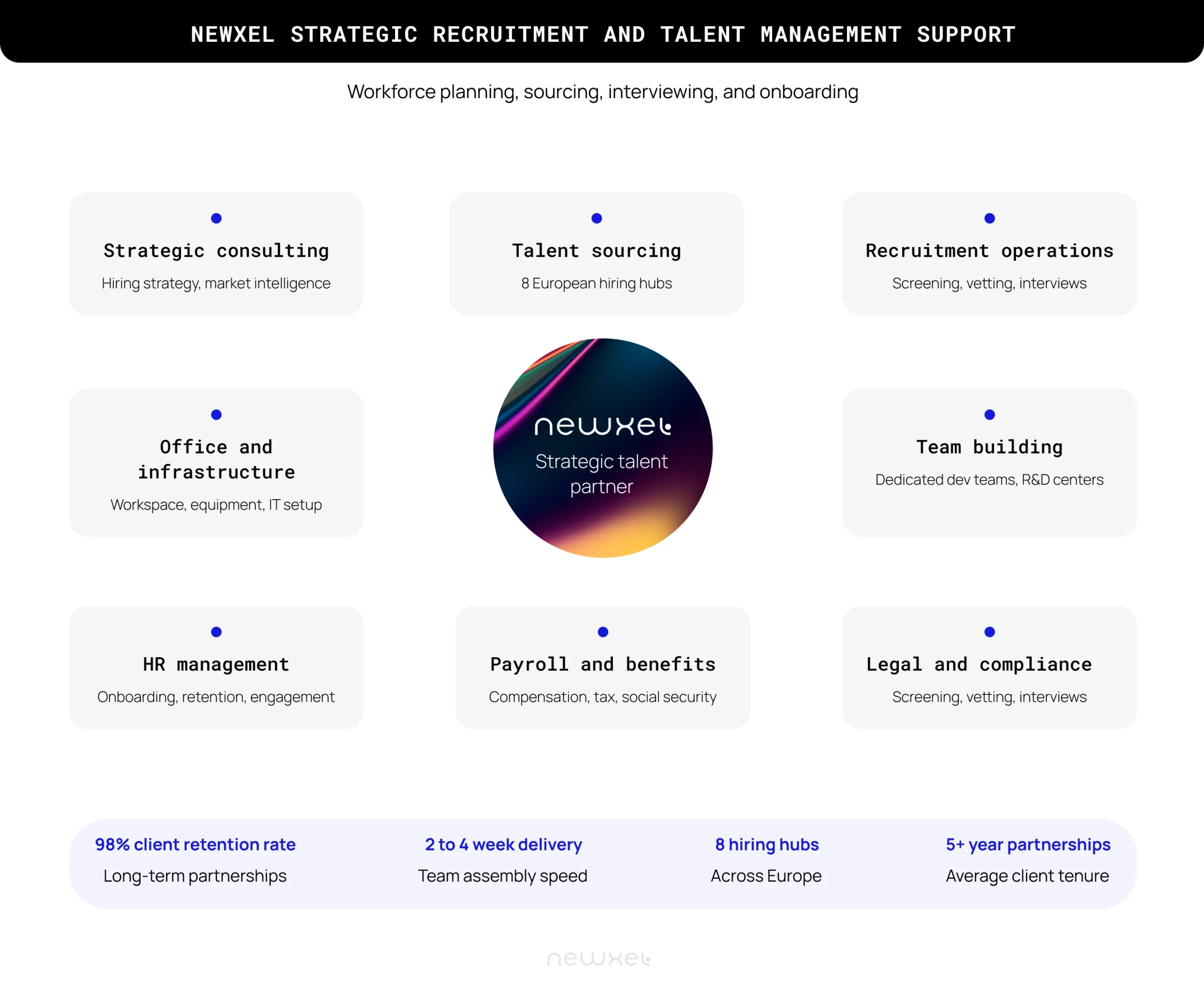
Figure 4: Newxel strategic recruitment and talent management support including HR, legal, and payroll
Newxel works as a strategic talent partner for technology companies building dedicated development teams and R&D centers across Europe. The company supports clients in Israel, the United States, and other countries with full hiring infrastructure: sourcing and vetting, legal compliance, payroll, HR management, and workplace setup.
The operating model is what sets Newxel apart from both traditional recruitment agencies and outsourcing providers. Newxel does not place candidates into a managed service where the provider controls the work. It builds dedicated teams that belong to the client: following the client’s processes, using the client’s tools, reporting to the client’s leadership. The client retains full control. Newxel handles the strategic and operational layers that make it possible to build and run that team across borders.
In practice, this means access to 8 European hiring hubs with deep local sourcing networks and market knowledge. It means a structured recruitment process that can assemble a team within 2 to 4 weeks. And it means ongoing support for everything from employment contracts and payroll to office infrastructure and employee engagement, so the client’s leadership team can focus on the work, not the logistics.
The results speak for themselves. Newxel maintains a 98% client retention rate, with average partnerships lasting over 5 years. Numbers like those do not come from transactional hiring. They come from building something together over time, adapting as the client’s needs evolve, and consistently delivering the kind of talent that moves the business forward.
For companies evaluating recruitment partners, the real question is not whether a provider can source resumes. Most can. The question is whether they can integrate into your strategic hiring process, deliver consistent quality as your needs change, and handle the operational realities of running distributed teams across multiple jurisdictions.
The companies that build great teams over time share a common trait: they treat hiring as a core capability, not an administrative side task. They plan ahead, measure what matters and invest in systems that make each hiring cycle better than the last. And they recognize that the quality of the people they bring in shapes every other outcome the company will produce.
That is what strategic recruitment looks like in practice: a living system that connects the company’s direction to the people it hires and how it hires them. The research supports the urgency: skills gaps are now the number one barrier to business transformation according to the World Economic Forum, and SHRM’s data shows that hiring difficulties have persisted at high levels for nearly a decade. These challenges reward companies that prepare, not those that react.
Whether you are a founder preparing for your first major hiring push, a HR leader rebuilding your talent acquisition function, or an executive evaluating partners for international team building, the starting point is the same. Step back from the individual requisitions. Look at the system to make it intentional and measurable. And keep making it better.
That is how you turn strategic recruitment from a concept into a competitive advantage.
SHRM. 2025 Talent Trends Report. Society for Human Resource Management, 2025.
SHRM. 2025 Recruiting Executives Benchmarking Report. Society for Human Resource Management, 2025.
World Economic Forum. The Future of Jobs Report 2025. January 2025.
HR.com. Future of Recruitment Technologies 2025-26. HR Research Institute, October 2025.
PeopleScout. 7 Breakthrough Predictions for Recruitment in 2026. November 2025.
Talentful. Designing a High-Performing Recruitment Organization: 3 Strategies for 2025. December 2024.
Newxel. Internal research and operational hiring data, 2025.