The UAE Tech Boom Is Creating a New Talent Challenge
The UAE Tech Boom and Its Growing Talent Challenge
8 min
· November 23, 2026
Last updated: November 23, 2026

Few countries are moving as fast on technology as the UAE. Abu Dhabi is building one of the largest AI compute campuses in the world. Dubai is adding fintech and AI companies at a pace that would make most financial centers jealous. Government strategies set clear targets for the digital economy, and capital keeps flowing in to meet them.
All of that creates a very practical problem for anyone running an engineering team in the country. Infrastructure can be bought, licensed or built on a schedule. Experienced AI engineers, cloud architects and platform specialists can’t. They have to be found, convinced and onboarded, and right now there are far more open roles than people who can fill them.
This article looks at the numbers behind the boom, where exactly the talent gap sits, and what UAE companies are doing to keep delivery on track.
The scale of investment over the past 18 months is hard to overstate.
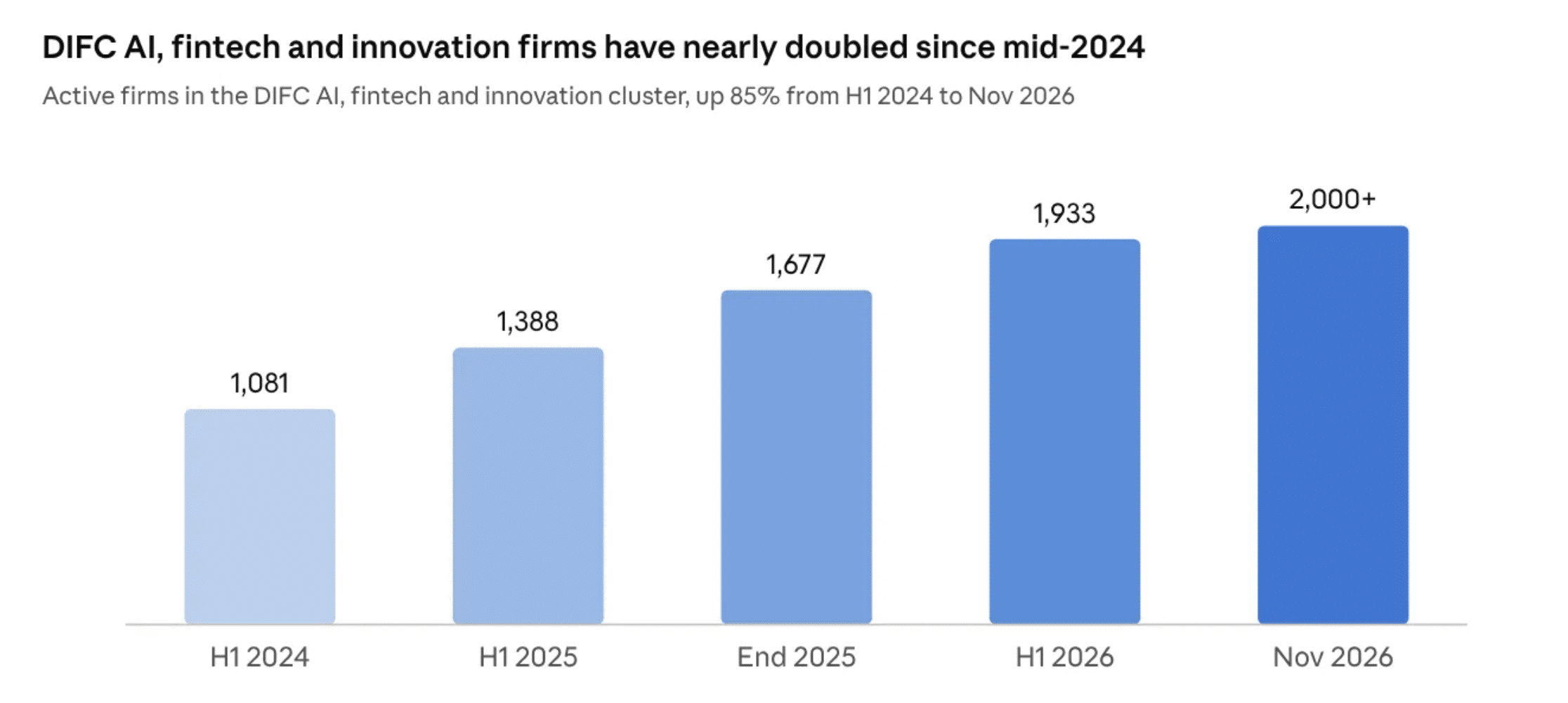
Every one of these developments needs people: engineers to build products on new compute, teams to integrate AI into banks and government services, and specialists to keep it all secure and running.
The UAE has no shortage of IT graduates. The shortage is in depth of experience.
ManpowerGroup’s 2026 Global Talent Shortage Survey found that 76% of UAE employers struggle to fill open roles, above both the regional average of 71% and the global average of 72%. For the first time, AI capabilities ranked as the hardest skills to source globally, ahead of traditional engineering and IT.
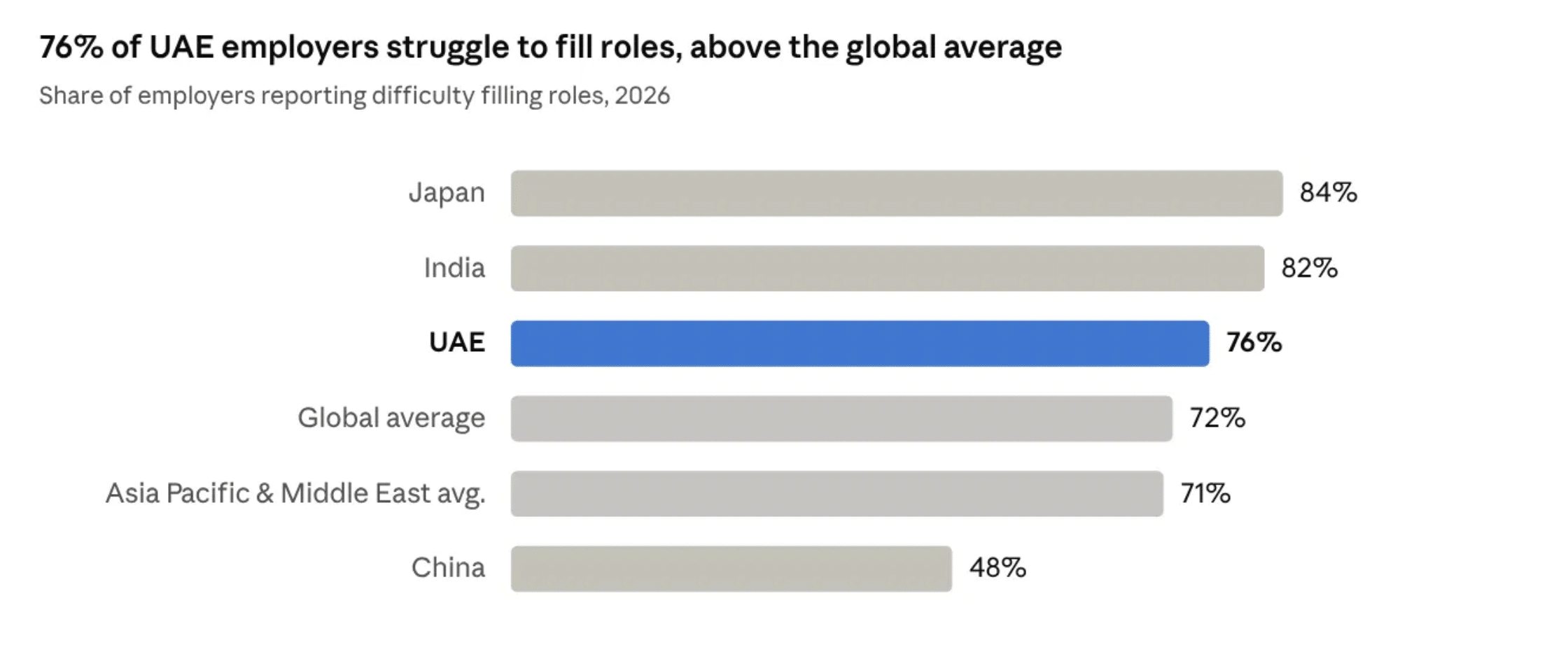
Data: ManpowerGroup 2026 Global Talent Shortage Survey, via People Matters
Recruiters working in the market describe the same pattern. Entry-level candidates are plentiful. Senior people with hands-on, production experience in a few specific areas are not. The roles that come up again and again:
Salaries reflect the pressure. RemotePass data showed the UAE posting an 18% rise in median salaries, the highest in its regional dataset, and noted that demand is being driven by the need for specialised capabilities more than raw headcount.
UAE companies offer a lot: tax-free income, a strong lifestyle, interesting projects and real career momentum. Even so, a few structural factors make it hard to close the gap through local hiring alone.
The talent pool is global, and so is the competition
A senior ML engineer in Dubai is being courted by the same companies in San Francisco, London, Singapore and Toronto. The best people are usually employed, well paid and not looking.
Relocation takes time
Visas, housing and onboarding logistics add weeks or months to every hire. Some UAE employers now routinely push start dates back by one to three months, or start new hires on a temporary payroll in their home country and relocate them later.
Existing teams absorb the shortfall. When roles stay open, the work lands on current engineers. That slows delivery and raises the risk of burnout and turnover in exactly the people you can least afford to lose.
Demand keeps moving
AI tooling and architectures change quickly. A team hired for last year’s roadmap may not have the skills this year’s roadmap needs, and retraining takes time.
Local workforce requirements shape the mix
Emiratisation targets mean companies need to plan carefully which roles are filled locally and how they build national talent alongside specialist hires.
None of this means local hiring is the wrong approach. It means local hiring on its own rarely moves fast enough to match the roadmap.
The more interesting shift is in how UAE employers are thinking about where talent comes from.
New talent corridors. India remains a foundation of the UAE’s tech workforce, and Egypt and Pakistan supply large volumes of engineers. Alongside them, employers are looking further afield. Recruiters point to Eastern Europe (Poland, Romania, the Czech Republic and the wider region) as a source of deep technical talent in engineering, software architecture and cybersecurity, with Sub-Saharan Africa, the Philippines and Vietnam also gaining attention.
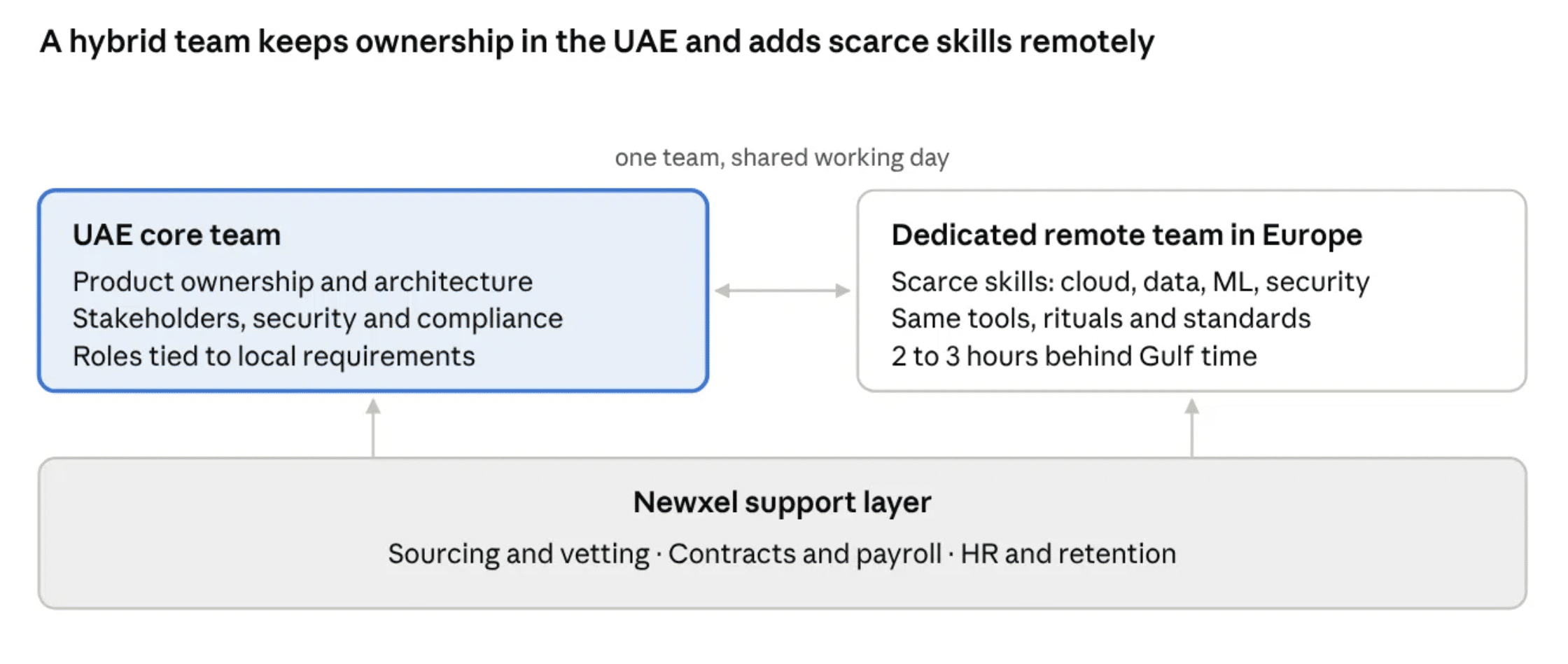
Distributed teams as a way to add skills. UAE companies increasingly work with engineers based in other countries to cover skills they can’t find locally. These specialists work alongside a permanent core team in the UAE. Companies mainly do this to get the expertise they need and move faster, and lower costs come as a secondary benefit.
Flexible onboarding. Companies can bring people in before they relocate. Local employment partners can handle contracts, payroll and compliance on the company’s behalf, and new hires can start remotely. The UAE also offers several types of work permits (full-time, part-time, temporary and flexible).
Upskilling. Companies are investing in their existing teams too. Coursera reported a 105% year-on-year rise in UAE enrollments in generative AI courses. Upskilling matters, though it works on a longer timeline than most product roadmaps allow.
For companies building distributed engineering teams, Eastern Europe has a few practical advantages.
Time zone overlap. Most of the region is one to three hours behind the UAE, which means a nearly full shared working day. Daily standups, pairing sessions and quick decisions happen in real time instead of across an overnight handoff.
Senior engineering depth. The region has a long tradition of strong technical education and a large pool of engineers with years of experience on products for US, UK and EU companies. That includes the scarce profiles UAE employers are chasing: cloud and DevOps, data engineering, backend architecture, security and applied AI.
Working culture. Engineers in the region are used to remote collaboration with international product teams, communicate in English and tend to be direct about risks and trade-offs, which keeps distributed projects honest.
Speed to start. A remote engineer can often begin within weeks, without waiting on relocation. If the plan is for some team members to move to the UAE later, that can happen once the collaboration is proven.
If you are planning engineering capacity for 2027, a few principles help.
Newxel finds, vets and pays people for technology companies. Found by AI and experts, vouched for by a named recruiter. You lead the work.
First vetted candidates within 5 working days. If the hire leaves or doesn’t work out within 90 days, we find a replacement.
One fee per hire, tied to the person’s salary. If the person works through our Payroll Solution, a small fixed monthly fee covers payroll.
Tell us the role. You’ll see the price within 24 hours.