Staff Augmentation in Eastern Europe: Best Practices for Team Growth
21 min
· February 10, 2026

With your Series B 3 months behind you, the focus has shifted to meeting the board’s Q3 deadline for the enterprise tier. However, scaling the product is proving difficult with an engineering team that is already at capacity. Traditional hiring through LinkedIn hasn’t been effective, yielding more interest from recruiters than qualified candidates, and the current market rate for senior developers that is often exceeding $180,000 plus significant equity presents a serious challenge for your budget.
This scenario plays out daily at growth-stage startups and established software companies across the US, UK, and Israel. The math of domestic hiring simply doesn’t work when you need to double your engineering capacity within six months without doubling your burn rate.
IT staff augmentation in Eastern Europe has become the answer for thousands of tech companies facing this exact problem. But most guides on the topic read like travel brochures: vague promises about “skilled talent pools” and “cost savings” without explaining how staff augmentation in Eastern Europe actually works when you need to integrate five developers into your existing team next month.
This guide is different. We will cover the specific decisions you need to make when considering team extension in Eastern Europe, the questions your partners should be able to answer, and the operational details that determine whether your extended team becomes a competitive advantage or a coordination headache.
Central and Eastern Europe currently employs over 3.5 million ICT specialists across its primary tech hubs. The IT staff augmentation market grew to $7.35 billion in 2025 and is projected to reach $11.94 billion by 2032, growing at 7.11% annually. The broader IT services market in the region hit $5.43 trillion by end of 2025, with software and IT services spending growing 50% and projected to nearly double by 2030.
These numbers matter because they reflect sustained investment in staff augmentation in Eastern Europe, not a temporary arbitrage opportunity. Western European and North American companies are building R&D centers, not just hiring contractors. Intel committed $4.6 billion to a semiconductor facility near Wroclaw, Poland. Bosch, Siemens, and IBM operate engineering centers in Bucharest and Cluj-Napoca. This infrastructure creates a talent ecosystem where developers gain experience on complex, enterprise-grade projects.
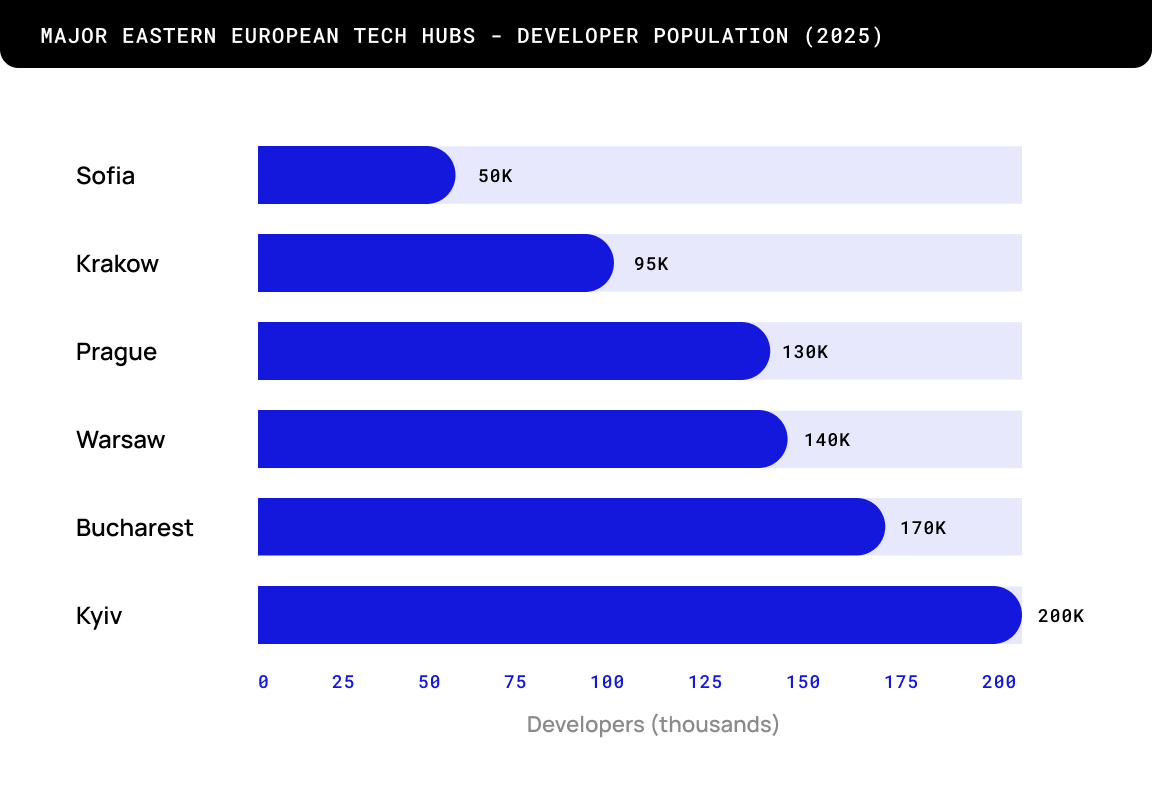
Figure 1: Major Eastern European Tech Hubs – Developer Population (2025)
The region produces around 80,000 STEM graduates annually. Poland alone has over 400 higher education institutions, with 22 universities appearing in the QS World University Rankings 2024. More than 300 higher educational institutions offer ICT programs across the region, with over 80 ranking in the QS World University Rankings 2025. In the EF English Proficiency Index 2024, Poland ranked 15th globally, Romania 12th, and Bulgaria 16th, all in the high proficiency band, ahead of France, Spain, and Italy.
But here’s what the statistics don’t capture about team extension in Eastern Europe: the operational maturity of the ecosystem. Developers in Poland and Romania have spent the past decade working embedded in Western product teams. They have absorbed agile practices, code review standards, and communication norms that make IT staff augmentation far smoother than raw technical skill would predict.
The most active users of staff augmentation in Eastern Europe aren’t Fortune 500 companies looking to trim costs. They are Series A through Series C startups facing a specific problem: they need to scale engineering faster than domestic hiring allows, but they can’t afford the coordination overhead of traditional outsourcing.
According to the Index Ventures “Scaling Through Chaos” research, high-growth startups often need to scale their engineering teams 2-3x annually. The Society for Human Resource Management estimates the average cost of hiring at $4,129 per position before accounting for the 42-day average time-to-fill or the productivity loss during onboarding. For a startup trying to hire 12 engineers in 6 months, the traditional approach consumes resources the company doesn’t have.
Team extension in Eastern Europe compresses this timeline dramatically. Where domestic hiring takes 2-4 months from posting to productive output, experienced IT staff augmentation partners can mobilize pre-vetted developers within 2-6 weeks. This speed difference can determine whether you ship before your competitor or spend another quarter explaining delays to your board.
There’s another factor specific to startups: flexibility. Traditional employment creates fixed costs and complicated off-boarding when project needs shift. Staff augmentation in Eastern Europe lets you scale capacity up after a funding round and down during a strategic pivot without the legal and emotional complexity of layoffs. This isn’t about treating people as disposable, but very much about matching capacity to genuine need in both directions.
Growth-stage startups also face a particular challenge that larger companies may not have: they need senior technical talent but can’t always offer the compensation packages that Big Tech provides. Eastern European developers with 8-10 years of experience often have backgrounds at companies like EPAM, Luxoft, or major product companies: they’ve worked on complex systems at scale. But their compensation expectations align with Eastern European markets, not Silicon Valley. This creates an opportunity to access experience levels through team extension in Eastern Europe that might otherwise be out of reach.
Let’s talk numbers without the consultant doublespeak.
In 2025, Eastern European developer salaries range from $20,000-25,000 annually for junior developers, $30,000-35,000 for mid-level, and $40,000-50,000 for senior developers.
Note: These salary figures are approximate market ranges and vary significantly based on experience level, specific technical skills, location within each country, company size, and current market conditions. They should be used as general guidance for IT staff augmentation planning, not as contractual commitments or guarantees. Actual compensation packages may differ based on individual circumstances and negotiations.
Compare that to US backend developers earning $70,000-102,000 annually, and you’re looking at savings of roughly 46-50% for comparable talent through staff augmentation in Eastern Europe. Western European companies save 34-51% on operational costs when hiring in the region. According to recent research, 77.4% of tech companies hire remote talent, and for 82.9% of them, cost efficiency is the primary reason for choosing team extension in Eastern Europe.
But here’s the reality: these rates have been rising 3-8% annually, with AI/ML specialists and senior roles increasing faster. The cost advantage of IT staff augmentation is narrowing but remains substantial. If your entire strategy is built on getting the absolute cheapest developers, you’re setting yourself up for disappointment.
The total cost of staff augmentation in Eastern Europe is more than just salary. Factor in:
A realistic example: hiring a mid-level developer in Poland at $35,000 annual salary through team extension in Eastern Europe costs approximately $45,000-50,000 total annual cost when you include employer contributions, EOR fees, equipment, and tools. That’s still significantly less than $100,000-120,000 for comparable talent in major US markets, but you need to understand the full picture of IT staff augmentation costs.
Eastern Europe isn’t a monolith. Each country brings different strengths to staff augmentation in Eastern Europe, with distinct challenges and cultural factors.
The market: Over 525,000 IT professionals, with major hubs in Warsaw, Krakow, Wroclaw, Katowice, and the Tricity area (Gdansk-Gdynia-Sopot). These hubs account for over 62% of all developers in Poland.
Technical strengths: Strong in enterprise systems, fintech, and backend development. Poland’s tech industry ranks 13th in Europe for revenue, estimated to reach $6.47 billion in 2025.
Cost reality: Mid-level developers: $30,000-35,000 annually. Poland has the highest rates in the region but also the most mature IT staff augmentation ecosystem. You’re paying for established infrastructure and cultural proximity to Western Europe.
Cultural notes: Direct communication style, strong work ethic, minimal timezone friction with both Western Europe and US East Coast. High English proficiency—12th globally.
The market: Approximately 200,000 developers concentrated in Kyiv, Lviv, Kharkiv, and Dnipro. Despite ongoing challenges, Ukrainian IT companies delivered 95% of signed deals throughout 2023-24, thanks to redundant power systems and Starlink adoption.
Technical strengths: Exceptional in distributed systems, AI/ML, and complex problem-solving. Ukrainian developers consistently rank high in international coding competitions (TopCoder, HackerRank).
Cost reality: Junior: ~$20,000, Mid-level: $30,000-35,000, Senior: $40,000-50,000 annually. Ukraine remains the most budget-friendly location for quality talent in team extension in Eastern Europe.
Cultural notes: Strong technical culture, adaptable, experienced with remote work. High English proficiency in IT sector. Current geopolitical situation requires contingency planning but hasn’t prevented successful IT staff augmentation engagements.
The market: Around 170,000 developers, primarily in Bucharest, Cluj-Napoca, Timisoara, and Iasi. Romania’s ICT industry is forecasted to account for 10% of the national GDP by 2030. IT services generated $1.38 billion in revenue in 2025, growing at 6.78% CAGR.
Technical strengths: Strong in testing/QA, cybersecurity, and DevOps. Growing expertise in AI and data science. Home to three unicorns: UiPath (valued at $35B), eMAG, and MultiverseX.
Cost reality: Junior: ~$25,000, Mid-level: $30,000-35,000, Senior: $45,000-55,000 annually. Mid-range pricing with strong quality for staff augmentation in Eastern Europe.
Business friendliness: Tech companies enjoy profit tax exemption for the first 10 years, 50% deduction of eligible R&D expenses, and accelerated depreciation for R&D equipment.
The market: Approximately 50,000 developers, mainly in Sofia, Plovdiv, and Burgas. Sofia accounts for 87% of all local startups.
Technical strengths: Gaming, graphics programming, and mobile development. Strong mathematical and algorithmic foundations.
Cost reality: Junior: ~$18,000-22,000, Mid-level: $28,000-32,000, Senior: $40,000-48,000 annually. Lower costs without compromising quality in IT staff augmentation.
Business friendliness: Tax-friendly haven in the EU with flat 10% rate for both personal and corporate income taxes, making it increasingly attractive for Western companies considering team extension in Eastern Europe.
The market: About 130,000 developers, concentrated in Prague and Brno. The software development industry is growing at 9.7% CAGR between 2020 and 2025, with tech industry revenue estimated to reach $6.47 billion in 2025.
Technical strengths: Enterprise software, automation, and industrial IoT. Strong German language skills benefit companies working in DACH markets.
Cost reality: Higher than Poland, comparable to or slightly above Western European rates in Prague. Better value in Brno and smaller cities for staff augmentation in Eastern Europe.
Cultural notes: Strong work culture, reliable, process-oriented. Close cultural affinity with Germany and Austria. Has the most innovative economy and is the 3rd largest startup ecosystem in the region.
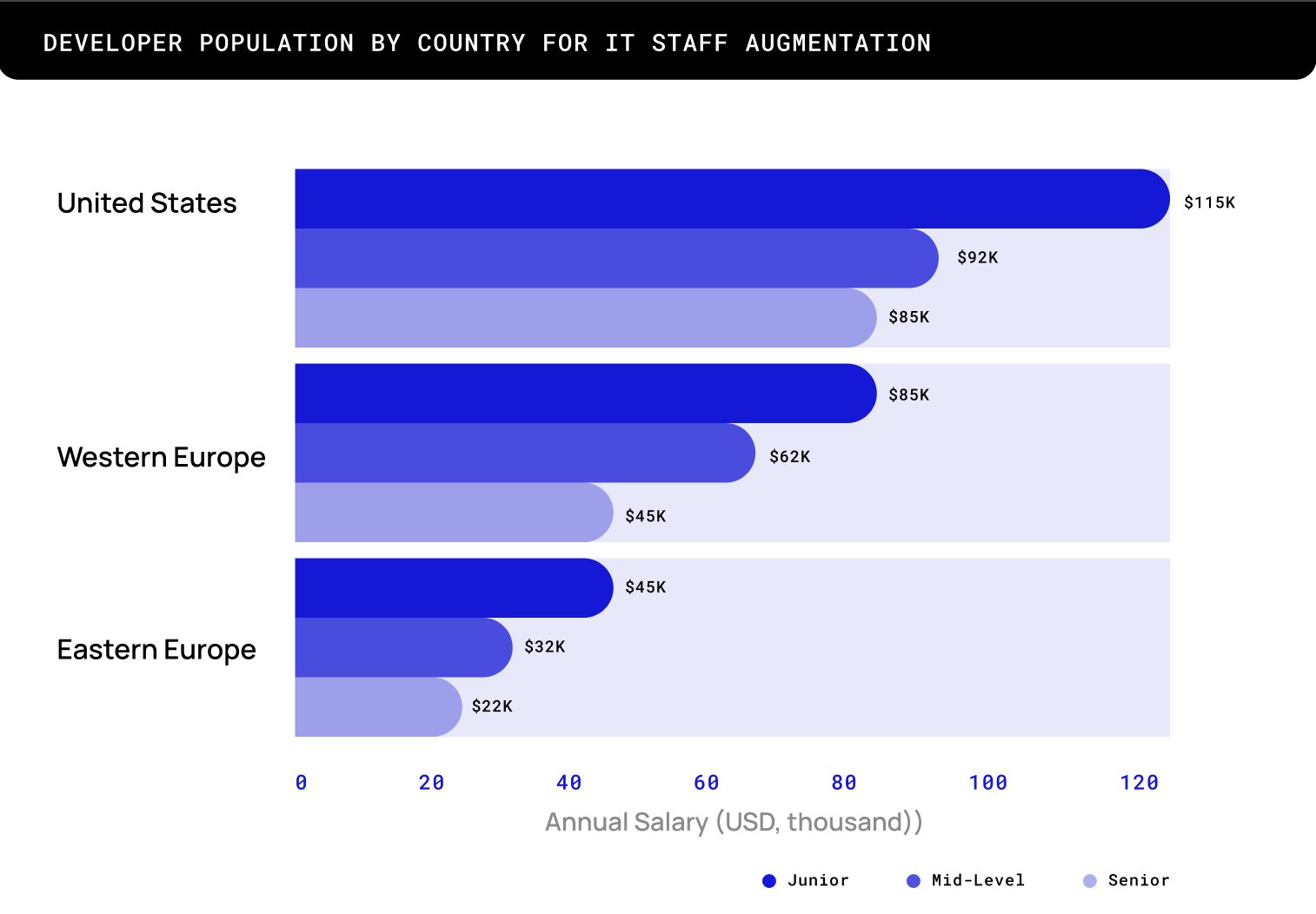
Figure 3: Developer Population by Country for IT Staff Augmentation
Understanding market potential is one thing. Executing team extension in Eastern Europe successfully is what separates companies that build competitive advantages from those that create expensive coordination problems.
You have two paths for IT staff augmentation:
Register a legal entity in the target country. This gives maximum control but requires navigating local regulations, setting up payroll systems, understanding employment law, managing benefits, and maintaining compliance. This makes sense if you’re planning substantial long-term presence (20+ developers) for staff augmentation in Eastern Europe or need specific legal structures.
Work through an Employer of Record (EOR) or IT staff augmentation partner. The partner handles employment paperwork, payroll, benefits, compliance, and local regulations. Developers work exclusively for you but are technically employed by the partner. Most companies start here: it gets you operational in weeks rather than months.
What a good EOR handles for team extension in Eastern Europe: employment contracts compliant with local law, monthly payroll processing, tax withholding and reporting, mandatory benefits and insurance, HR support and employee relations, equipment procurement and IT setup, office space (if needed), ongoing compliance monitoring.
The trade-off? Less control over employment terms and a service fee (typically a percentage of payroll or flat monthly rate). But you avoid entity setup complexity and can scale IT staff augmentation faster.
The challenge in staff augmentation in Eastern Europe is finding developers who can actually do the work, not developers who look good on paper.
Most companies use an IT staff augmentation partner rather than recruiting directly because recruiting in a foreign market requires understanding local salary expectations, employment laws, cultural nuances, and having established talent networks. Building this from scratch takes time you probably don’t have.
Good partners pre-screen developers for technical skills before presenting them to you. They verify past work, test coding abilities, and assess English proficiency. The best team extension in Eastern Europe partners achieve 85% offer acceptance rates on candidates they present meaning they’re good at matching developers to actual requirements.
You still need your own technical interviews. No IT staff augmentation partner can fully understand your specific technical needs, team dynamics, and cultural fit requirements. But you’re interviewing from a pre-qualified pool.
Timeline expectations: finding the right developers for staff augmentation in Eastern Europe typically takes 3-5 weeks from kickoff to start date. Faster usually means compromising on quality. Slower might mean your requirements are too narrow or compensation isn’t competitive.
Getting developers on payroll is easy. Getting them productive and integrated through team extension in Eastern Europe is where success or failure happens.
Your onboarding for remote developers needs more structure than local hires. You can’t rely on osmosis and hallway conversations. Everything needs to be explicit: technical setup, codebase architecture, development workflows, testing requirements, deployment processes, communication protocols, team culture.
Communication patterns matter more than you think in IT staff augmentation. According to recent data, 77.4% of tech companies hire remote talent in 2025, and successful ones have figured out that you can’t just add remote developers to existing processes and expect staff augmentation in Eastern Europe to work.
What actually works for team extension in Eastern Europe in you are operating in another time zone:
Treating remote developers as full team members, not contractors
The timezone situation helps with IT staff augmentation. Most Eastern European cities are 1-2 hours ahead of Western Europe and 7-9 hours ahead of US East Coast. Not perfect but workable. European companies get good overlap. US companies can arrange early mornings (US) with late afternoons (Europe).
Companies that struggle with staff augmentation in Eastern Europe usually fail at: unclear technical requirements, poor communication structure, treating remote team members as second-class citizens, or expecting remote developers to work unsupervised without adequate support.
When evaluating potential partners for team extension in Eastern Europe, these questions separate serious operations from sales presentations:
If they can’t answer these questions clearly and specifically, that’s your signal to keep looking for a different staff augmentation in Eastern Europe partner.
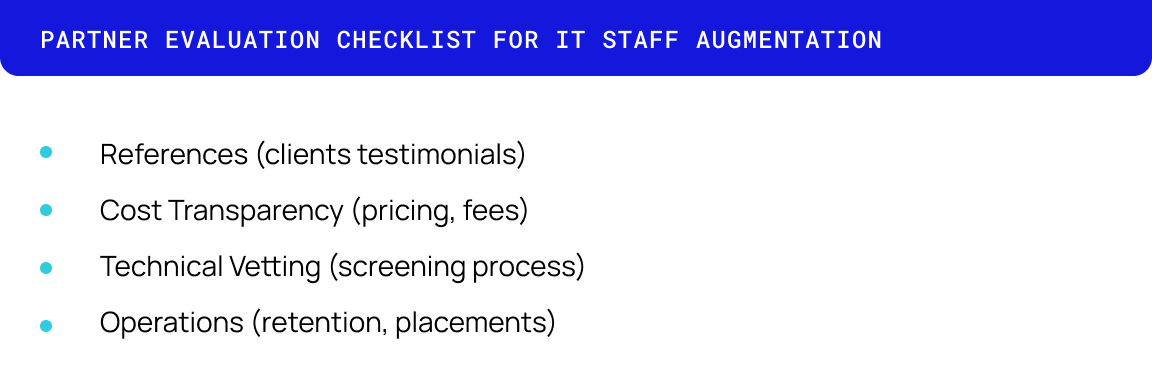
Figure 4: Partner Evaluation Checklist for IT Staff Augmentation
Most companies make predictable mistakes with team extension in Eastern Europe. Learning from others’ failures is cheaper than experiencing them yourself.
This is the most common failure pattern in staff augmentation in Eastern Europe. Companies hire developers through IT staff augmentation but treat them like traditional contractors: excluded from internal meetings, kept at arm’s length from strategic discussions, given well-defined tasks without context.
As the result, you get developers who execute mechanically without understanding goals, limited ability to spot problems early, no sense of ownership, high turnover.
The fix: include remote developers in team meetings, product discussions, technical planning. Give them visibility into roadmaps and business context. Companies with the best retention rates (94-98%) in team extension in Eastern Europe don’t distinguish between “internal” and “augmented” team members in day-to-day operations.
You can’t onboard remote developers the way you onboard local hires. Local hires can tap someone on the shoulder when confused. Remote developers in IT staff augmentation need explicit, written documentation.
Typical failure: developer joins, gets code access, maybe one intro call, then gets assigned tickets. Three weeks later, everyone wonders why productivity is low.
Effective onboarding for staff augmentation in Eastern Europe requires: comprehensive technical documentation, recorded architecture walkthroughs, clearly documented development workflows, pair programming sessions in first few weeks, assigned mentor from internal team, regular check-ins during first month, explicit cultural and communication guidelines.
If your entire decision process for team extension in Eastern Europe is “find the cheapest developers,” you’ll get exactly what you pay for.
The cheapest developers are usually cheap for a reason: limited experience, weak technical skills, poor English proficiency, high turnover risk, or working with an IT staff augmentation partner who cuts corners.
Right approach: define technical skills and experience level you need, establish realistic budget based on market rates, evaluate candidates on technical capability and cultural fit first, negotiate on price within reasonable bounds. A developer who costs 20% more but produces code that doesn’t need rewriting is worth far more in staff augmentation in Eastern Europe.
How do you know if your IT staff augmentation strategy is working? Many companies can’t answer because they never defined success metrics for team extension in Eastern Europe.
Useful metrics for staff augmentation in Eastern Europe:
Without tracking these, you’re flying blind. You might be getting great results without realizing it, or hemorrhaging money on an ineffective IT staff augmentation program.
Getting started with staff augmentation in Eastern Europe is one thing. Building something that works long-term requires thinking beyond initial setup.
Developers who see a future with your company stay. Those who feel stuck leave. This is especially important with remote team members in IT staff augmentation who don’t benefit from in-person visibility and informal mentorship.
Provide clear career paths. Give them chances to grow technically through challenging work. Include them in architectural decisions. Invest in learning and development—budget for conferences, courses, certifications. Regular feedback and 1-on-1s matter. Don’t let remote team members in team extension in Eastern Europe go weeks without direct interaction with their manager.
The best companies maintain 94-98% retention because they invest in their extended teams’ growth through staff augmentation in Eastern Europe.
Document everything. Decisions, architecture, processes, tribal knowledge – write it down. Remote team members in IT staff augmentation can’t absorb information through osmosis.
Over-communicate initially. Better to provide too much context than too little. As the relationship matures and shared understanding develops, you can dial back.
Use video for important discussions. Text communication loses nuance and creates frustrating delays in team extension in Eastern Europe.
Bring people together occasionally. When budget allows, in-person time: whether bringing extended team members to HQ or sending leads to their location builds trust that sustains through months of remote work in staff augmentation in Eastern Europe.
Treat extended team members as actual team members. Include them in celebrations, learning opportunities, and career conversations. People who feel like second-class participants deliver second-class work.
Several trends will shape team extension in Eastern Europe decisions over the coming years.
Rates are rising, but the gap remains meaningful. Salaries for staff augmentation in Eastern Europe are growing 3-8% annually across the region, with AI/ML and senior roles increasing faster. The cost advantage of IT staff augmentation is narrowing but remains substantial—companies building relationships now benefit before further convergence.
The talent shortage is worsening everywhere. Europe needs nearly 10 million more tech workers by 2030 to meet EU Digital Decade targets. With 57% of firms already struggling to find qualified developers (Eurostat, 2024), competition for team extension in Eastern Europe talent will intensify from both European and American companies.
AI expertise is concentrating in the region. Eastern Europe’s AI market reached $6.1 billion in 2025 and is projected to grow another 26% by 2030. Poland and Romania now host AI Centers of Excellence. Companies planning AI initiatives should view staff augmentation in Eastern Europe as a strategic talent source.
Outcome-based partnerships are replacing traditional outsourcing. According to Deloitte, the shift is toward access to skills, agility, and product quality rather than pure cost arbitrage. Companies treating IT staff augmentation and team extension in Eastern Europe as strategic partners—not cost centers—will attract and retain better talent.
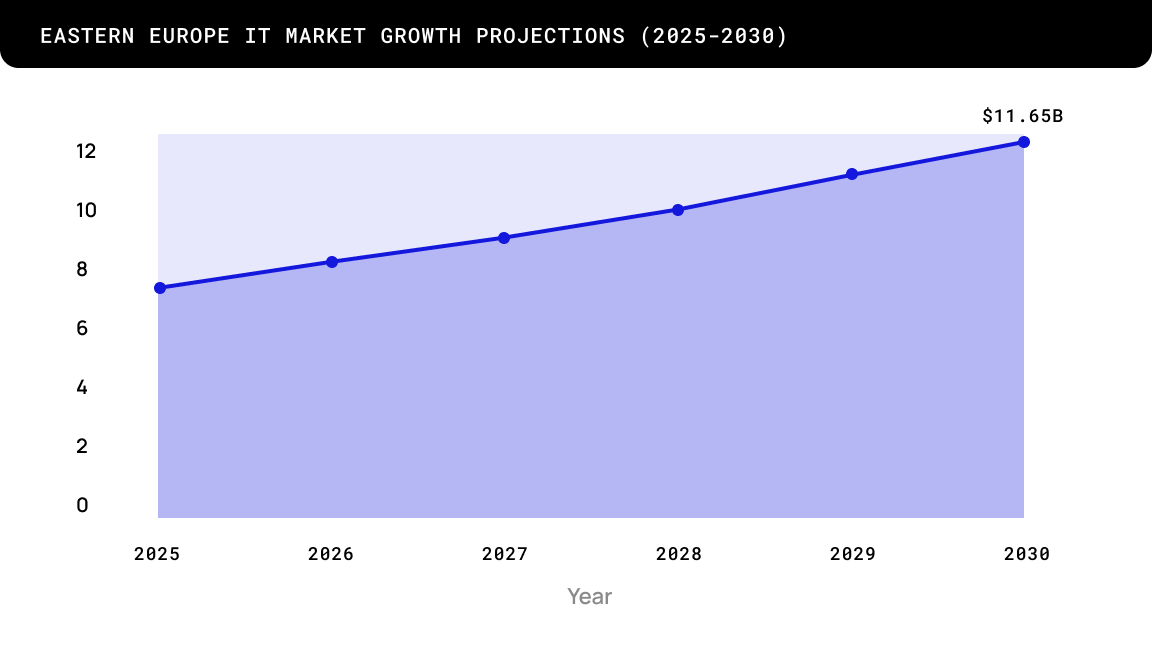
Figure 5: Eastern Europe IT Market Growth Projections (2025-2030)
IT staff augmentation in Eastern Europe makes sense when:
Staff augmentation in Eastern Europe probably doesn’t make sense when:
If you’re evaluating IT staff augmentation, start with honest self-assessment. How many developers? What specific skills? What timeline? What can you genuinely invest in integration?
Then evaluate 2-3 potential partners for staff augmentation in Eastern Europe. Use the questions in this guide to probe operational substance, not presentation quality. References matter more than slide decks.
Consider starting small. A pilot with 1-2 developers validates cultural fit, communication effectiveness, and work quality before larger commitment to team extension in Eastern Europe. The incremental approach reduces risk and builds internal confidence.
Finally, commit to the management investment honestly. Extended teams don’t manage themselves. Budget real time from your engineering leads for integration, documentation, and relationship building. If you’re unwilling to invest this attention, the IT staff augmentation engagement will underperform regardless of how talented the developers are.
The companies that get the most value from staff augmentation in Eastern Europe view it as a strategic capability, not a cost-reduction tactic. They invest in integration, build genuine relationships with their extended teams, and think in years rather than quarters.
The question isn’t whether Eastern European developers can deliver quality work through IT staff augmentation: that has been demonstrated across thousands of engagements by companies of every size. The question is whether your organization is prepared to integrate distributed talent effectively through team extension in Eastern Europe.
For CTOs, COOs, and HR leaders facing the universal challenge of building more while spending less, team extension in Eastern Europe offers a proven path that doesn’t require compromising on talent quality. The infrastructure for staff augmentation in Eastern Europe exists. The talent is available. The processes are mature.
What remains is your commitment to making IT staff augmentation work.
Newxel builds dedicated development teams across 8 European hiring hubs. If you’re exploring whether team extension in Eastern Europe fits your growth plans, we are happy to share what we have learned from hundreds of successful staff augmentation engagements.